


The enterprise search and AI-powered knowledge market has become one of the most dynamic segments in enterprise software. A surge in enterprise search acquisitions signals a structural shift: search is no longer a standalone utility — it is foundational AI infrastructure.
From strategic tuck-in deals to full platform consolidation, vendors are embedding AI-powered search directly into their workflow ecosystems. Yet amid this consolidation wave, independent innovators like GoSearch continue to deliver cross-platform, AI-augmented search — without locking buyers into a single vendor stack.
What Are Enterprise Search Software Acquisitions?
Enterprise search acquisitions are mergers and acquisitions in which larger software platforms purchase AI-powered search, knowledge discovery, or agentic workflow companies to embed advanced search capabilities directly into their core products.
Why This Is Happening
Enterprise search acquisitions are accelerating because:
- Search is becoming foundational to AI adoption across the enterprise.
- Buyers expect embedded, workflow-level intelligence — not standalone tools.
- AI agents require secure, permission-aware retrieval to operate effectively.
- Platforms want to control how knowledge is surfaced and activated within their ecosystems.
In short, search has evolved from a feature into essential AI infrastructure.
The Enterprise Search M&A Landscape
Enterprise search is no longer just about finding documents — it’s about surfacing actionable insights, powering workflows, and integrating with the tools teams already use. Recent enterprise search acquisitions show how major platforms are embedding AI-powered search into their core ecosystems.
HubSpot Acquires Dashworks
In 2025, HubSpot acquired Dashworks, an AI-powered workplace search assistant that delivers business context across apps, emails, documents, and meetings. Dashworks now enhances HubSpot’s AI capabilities, giving go-to-market teams contextual answers and actionable insights directly inside CRM workflows.
Strategic signal: CRM platforms are embedding AI search to power revenue intelligence.
ServiceNow Acquires Moveworks
ServiceNow’s acquisition of Moveworks brought a sophisticated AI assistant and enterprise search engine into its workflow platform. Moveworks’ agentic AI technology enables employees to ask questions, search across systems, and trigger intelligent actions — all within ServiceNow’s ecosystem.
Strategic signal: Search is converging with agentic automation.
Zendesk Acquires Unleash
In December 2025, Zendesk acquired Unleash, an AI-powered enterprise search platform connecting knowledge across 70+ content sources. The technology delivers permission-aware retrieval and AI summaries integrated into collaboration tools like Slack and Teams.
Strategic signal: Support platforms are prioritizing secure knowledge orchestration.
ClickUp Acquires Qatalog
ClickUp acquired Qatalog to unify work and knowledge management into a single “Converged AI Workspace.” Qatalog’s AI search and agentic automation are now embedded inside ClickUp, helping teams turn knowledge into action more efficiently.
Strategic signal: Work management platforms are collapsing search and execution into a single interface.
Other Notable Enterprise Search Acquisitions
Elastic acquired Swiftype, strengthening its enterprise search portfolio.
Across the market, smaller AI search startups are being absorbed into larger platforms. The trend is clear:
Enterprise search acquisitions are accelerating because search is becoming embedded AI infrastructure.
What Enterprise Search Acquisitions Mean for Buyers
The surge in enterprise search acquisitions signals more than market consolidation — it reflects a structural shift in how AI-powered knowledge systems are built and delivered. For buyers, this has meaningful implications.
1. Search Is Now Core Infrastructure
AI search is no longer a standalone productivity tool. Buyers increasingly expect it to be embedded across workflows, integrated into collaboration platforms, CRM systems, IT service tools, and knowledge hubs.
2. Platform Lock-In Is Increasing
Many enterprise search acquisitions result in search capabilities being tightly integrated into a single vendor ecosystem. While this can streamline adoption within that platform, it may reduce cross-tool visibility and long-term flexibility.
3. Security and Governance Are Non-Negotiable
Modern enterprise search must enforce permissions at query time, protect sensitive data, and meet compliance requirements. As a result, buyers are evaluating retrieval architecture and governance controls before feature comparisons.
4. Agentic AI Depends on Reliable Retrieval
AI agents can only act on the knowledge they can securely access. Enterprise search acquisitions increasingly focus on enabling workflow execution and automation — not just surfacing answers — which raises the bar for accuracy, security, and real-time access.
Independent Innovation in a Consolidating Market
While enterprise search acquisitions reshape the landscape, independent vendors maintain strategic advantages:
- Faster product iteration
- Cross-platform integrations
- Neutral architecture (no ecosystem bias)
- Flexible deployment models
This is where GoSearch differentiates — delivering unified, AI-powered search across the entire stack without being confined to one platform’s agenda.
Why GoSearch Stands Out Amid Enterprise Search Acquisitions
As enterprise search acquisitions consolidate capabilities inside larger platforms, GoSearch remains a best-of-breed solution purpose-built for unified AI search and agentic workflows across the entire enterprise stack.
Unified Cross-Tool Search
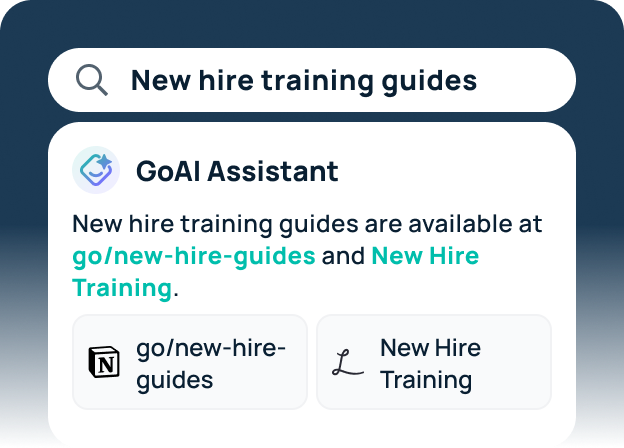
GoSearch connects 100+ workplace applications — including Slack, Gmail, Google Drive, Jira, Confluence, Salesforce, and more — without duplicating or centralizing data. Teams get a single, unified search experience across their existing tools.
Agentic AI Workflows
GoSearch moves beyond retrieval to execution. AI can draft emails, summarize reports, and trigger multi-step workflows across systems — turning insights into action.
Security-First Architecture
With hybrid retrieval and federated search, GoSearch enforces granular permissions at query time. This ensures enterprise-grade governance, compliance, and secure access to sensitive data.
Ecosystem Neutrality
Unlike solutions embedded through enterprise search acquisitions, GoSearch operates across your entire technology stack — not just within a single vendor ecosystem — giving organizations flexibility without lock-in.
How to Evaluate Solutions in a Market Shaped by Enterprise Search Acquisitions
As enterprise search acquisitions reshape the market, buyers must evaluate more than feature lists. The key is understanding architecture, flexibility, and long-term impact.
When assessing search and AI solutions, consider:
- Is the search capability confined to a single ecosystem, or does it operate across your full stack?
- Does the architecture rely on duplicating indexed data, or retrieve information in real time?
- Can the AI system take action and trigger workflows — or only provide answers?
- Is permission-aware security enforced dynamically at query time?
- Will this solution increase long-term vendor lock-in?
If your priorities include flexibility, real-time insights, and actionable AI workflows without ecosystem constraints, GoSearch is purpose-built to deliver.
Get Started with GoSearch
GoSearch helps organizations activate knowledge securely across their entire stack. From unified search to no-code agentic workflows, teams can move from insight to execution without ecosystem constraints.
Book a demo today and see how GoSearch delivers enterprise-grade AI search without lock-in.
Search across all your apps for instant AI answers with GoSearch
Schedule a demo