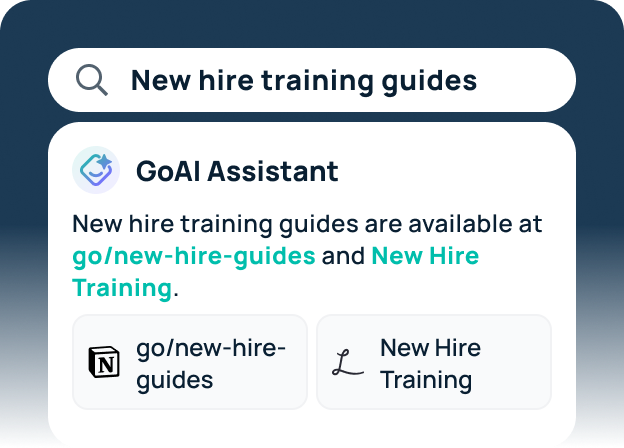




Information sprawl is an enterprise-sized issue.
With over 1,000 employees – each with their own files, projects, and workflows across company systems – enterprises generate tens of thousands of resources. These resources contain all sorts of company information, from market research to personnel insights to brand assets.
And this information isn’t useful if it isn’t usable.
The solution is an enterprise knowledge management system. Such a system organizes company information so it’s made explicit, accessible, and change-tolerant.
This article explains enterprise knowledge management more fully. We’ll list five major categories of knowledge management software, plus specific knowledge management tools within those categories. We’ll also offer tips on selecting the best system to unlock enterprise productivity and optimize knowledge access.
What is enterprise knowledge management?
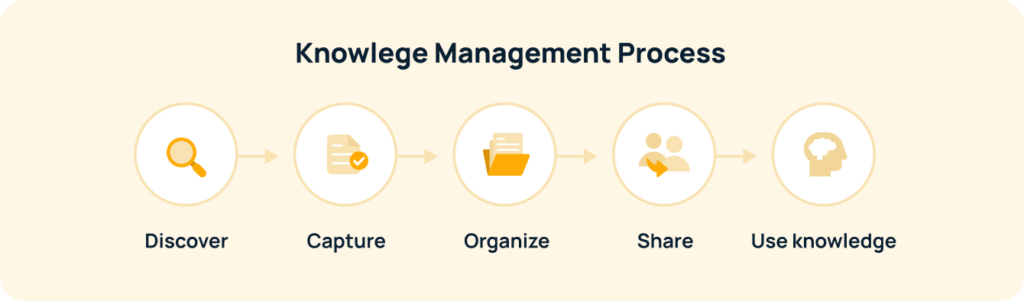
The knowledge management process involves discovering, capturing, organizing, sharing, and using knowledge within an organization. At the enterprise scale, knowledge management (KM) is more complicated due to greater numbers of resources, departments, employees, and types of knowledge. KM requires software that creates structure within enterprise systems, so people can easily access and disseminate information.
A modern Enterprise Knowledge Management System enables employees to:
- Find accurate answers quickly
- Understand context across tools
- Trust that information is current and permission-aware
- Act on knowledge, not just read it
In practice, enterprise knowledge management connects content, tools, and people into a unified knowledge layer.
Benefits of enterprise knowledge management
If you follow knowledge management best practices, you can unlock many tangible benefits. For a thorough explanation of the benefits listed below, check out this article on the benefits of knowledge management.
- Increase team productivity
- Eliminate redundant effort
- Break down cross-departmental knowledge silos
- Improve remote & hybrid work processes
- Streamline onboarding and training
- Prevent tacit knowledge and explicit knowledge loss during turnover and reductions
- Ignite innovation and growth
- Improve overall employee experience and engagement

What Are the 5 Core Components of an Enterprise Knowledge Management System?
While every organization is different, high-performing enterprise knowledge management systems are built on five core capabilities.
1. Centralized Knowledge Repositories
What is a centralized knowledge repository?
A centralized knowledge repository is where structured documentation and reference material live — such as policies, guides, and long-form content.
Common examples include:
- Wikis
- Document management systems
- Knowledge bases
Why it matters
Centralized repositories provide a single source of truth for foundational knowledge. They are essential for compliance, onboarding, and institutional memory.
Limitations
On their own, repositories struggle to keep up with:
- Rapid changes
- Context from other tools
- Real-time collaboration
That’s why repositories must be paired with search and integration layers.
2. Enterprise Search Across All Tools
What is enterprise search?
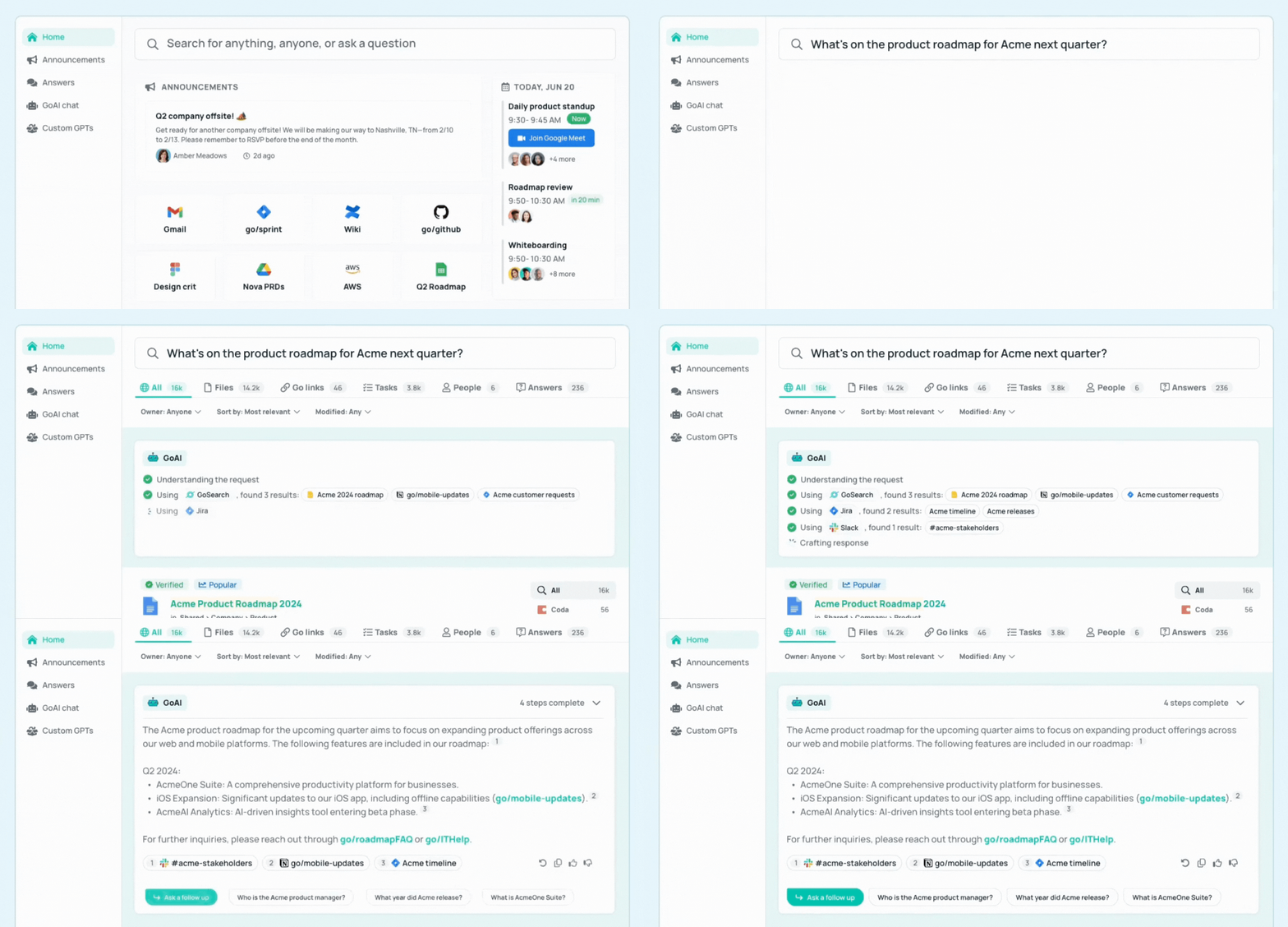
Enterprise search allows employees to search across all internal tools — including wikis, ticketing systems, CRMs, chat tools, and file storage — from one interface.
Why enterprise search is critical
Most enterprise knowledge does not live in one system. It’s spread across tools like:
- Confluence and Notion
- Jira and GitHub
- Salesforce and Zendesk
- Slack and Google Drive
Enterprise search unifies this knowledge by:
- Connecting directly to source systems
- Respecting existing permissions
- Understanding context and intent
This dramatically reduces time spent searching and increases trust in answers.
Top enterprise search tools:
- GoSearch
- Glean (hidden costs)
- Guru (more Knowledge Management)
- Slack AI (more limited)
3. Link Management and AI-Powered Knowledge Discovery
How AI improves enterprise knowledge management
AI transforms enterprise knowledge management by moving beyond keyword search to answer-based discovery.
Modern AI-powered systems can:
- Interpret natural language questions
- Synthesize answers from multiple sources
- Summarize long documents
- Surface relevant context automatically
Why this matters for AI visibility
AI systems are only as good as the knowledge they can access. When enterprise knowledge is structured, connected, and governed, AI tools become:
- More accurate
- More explainable
- More trustworthy
This is essential for both internal AI assistants and external AI discovery.
Link Management for Instant Access to Knowledge and Company Information
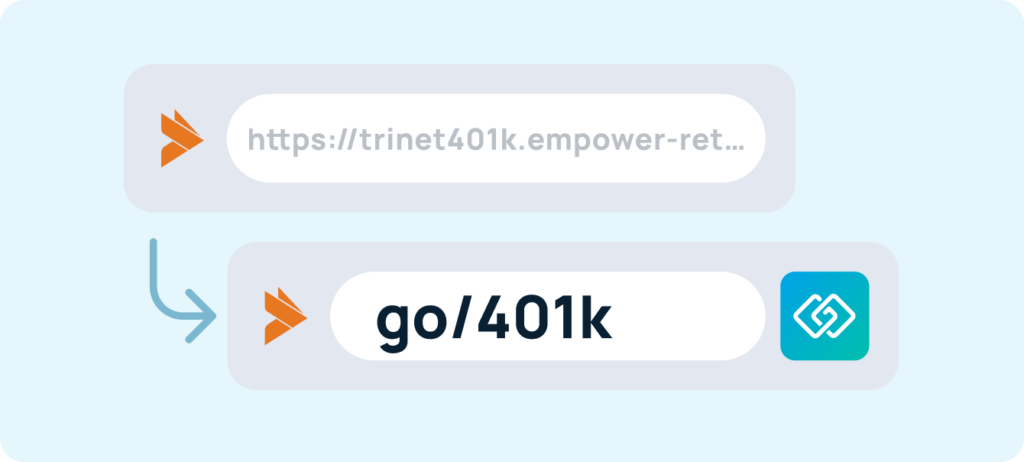
Internal link management provides the fastest way to access the resources you use most. These differ from external link management apps, like Bitly, which primarily brand and track links shared outside the organization. Internal link management apps allow you to organize, create, and share short, memorable links – called go links – within your company.
These go links let you share knowledge visually or verbally with team members. For instance, HR could tell you to check go/401k for updated information about retirement benefits. These links put company-wide knowledge assets at your fingertips, saving you time and navigational headaches.
Top link management tools:
- GoLinks (internal)
- Bitly (external)
- Rebrandly (external)
4. Knowledge Governance and Security
Why governance is non-negotiable
Enterprise knowledge management must balance accessibility with control.
Strong governance ensures:
- Users only see what they’re allowed to see
- Sensitive data stays protected
- Compliance requirements are met
Key governance features
A modern EKM system should:
- Inherit permissions from source systems
- Support role-based access controls
- Provide audit logs and transparency
- Prevent AI from accessing unauthorized data
Without governance, knowledge systems quickly become liabilities instead of assets.
5. People and Expertise Discovery
Why people are part of knowledge management
Not all knowledge is written down. Some of the most valuable information lives in people’s experience.
People discovery tools help employees:
- Find subject matter experts
- Understand who owns what
- Identify collaborators across teams
The impact on productivity
By connecting people to knowledge, organizations:
- Reduce bottlenecks
- Improve cross-team collaboration
- Preserve institutional knowledge
This human layer completes the enterprise knowledge management system.
How These Tools Work Together
An effective enterprise knowledge management system is not a single product — it’s an ecosystem.
When done right:
- Repositories store trusted content
- Enterprise search connects all tools
- AI turns information into answers
- Governance ensures security
- People discovery unlocks expertise
Together, they create a living knowledge layer that evolves with the organization.
Top people platform tools:
- GoProfiles
- Charthop
- Lattice
How to Choose the Right Enterprise Knowledge Management System
When evaluating solutions, look for platforms that:
- Integrate with your existing tech stack
- Scale across teams and data sources
- Support AI safely and responsibly
- Respect permissions and compliance needs
- Improve both human and AI productivity
Avoid systems that require moving or duplicating data just to make knowledge usable.
The Future of Enterprise Knowledge Management
In 2026 and beyond, enterprise knowledge management will increasingly power:
- AI assistants and copilots
- Automated workflows
- Decision intelligence
- Organizational learning
Selecting the right enterprise knowledge management software
If you’re ready to implement an enterprise knowledge management system at your company, use these steps to guide your decision-making:
- Outline organizational needs and goals
- Gather stakeholder and employee input
- Determine scalability
- Identify must-have features
- Consider security and data privacy requirements
- Set a budget and anticipated ROI
In addition to this list, think about which type(s) of knowledge management platform would be most impactful at your organization. Look for tools that work well alongside each other, so you can get the greatest impact out of a bundle of products.
The ultimate knowledge management bundle
For three enterprise knowledge management solutions built for each other, try GoLinks, GoSearch, and GoProfiles. Respectively, this internal link management app, enterprise search tool, and people platform can supercharge employees’ access to knowledge.
 GoLinks – the fastest way to access resources
 GoSearch – the best way to uncover information and gain insights
 GoProfiles – the best way to put names to faces, roles, locations, and accomplishments
All built by the same startup team, these platforms function as a suite with features you can trust:
- Highest-standard security and data privacy
- Built-in analytics
- Powerful integrations
- Scalability for your enterprise
- Frictionless UX
- Dedicated customer support
Use case: leveraging the GoLinks suite to streamline your work
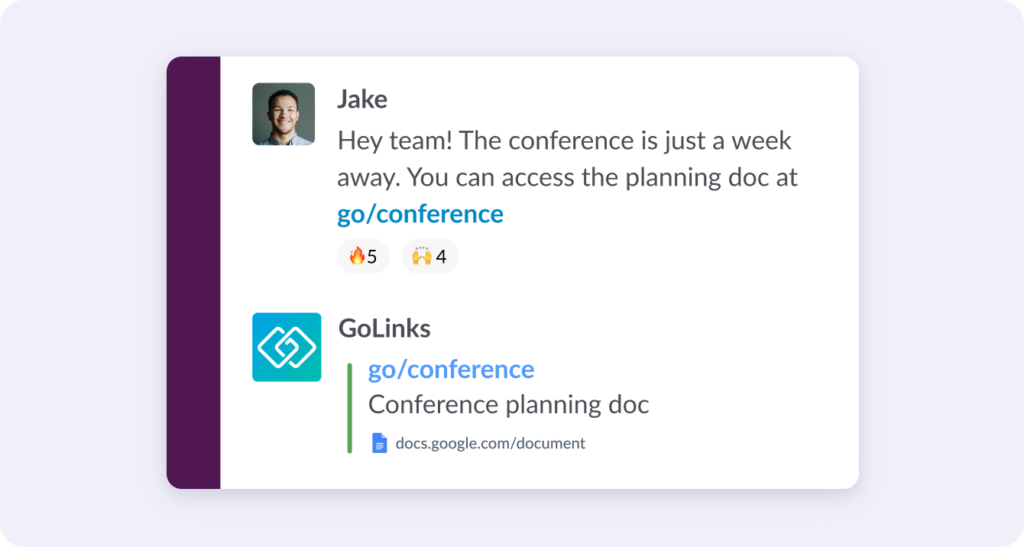
Let’s say you’re getting ready for a conference. Using GoLinks, you can access the planning doc at go/conference and share it through a clickable Slack message. Your design team shares go/booth-design, and your sales team uses go/talktrack to prep for conversations at the conference.
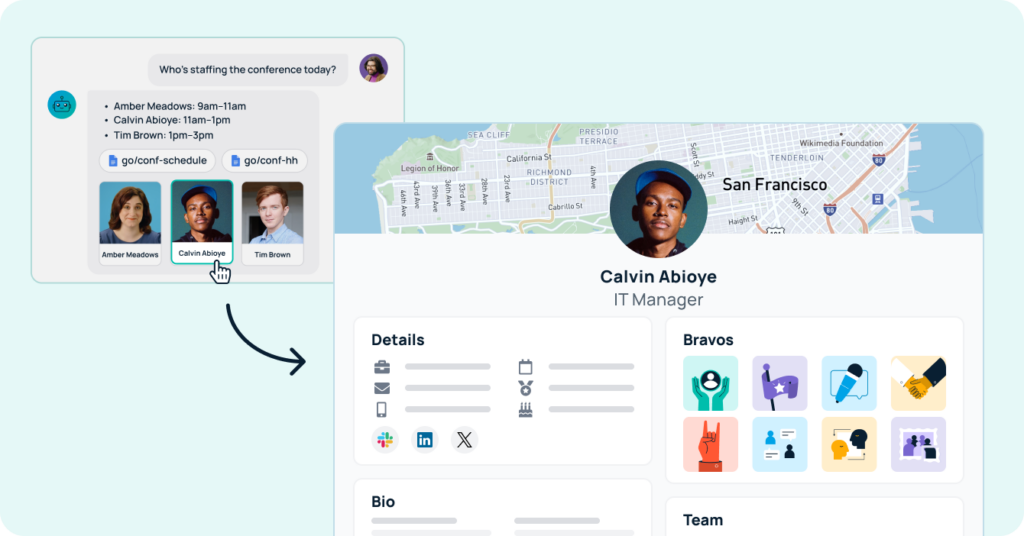
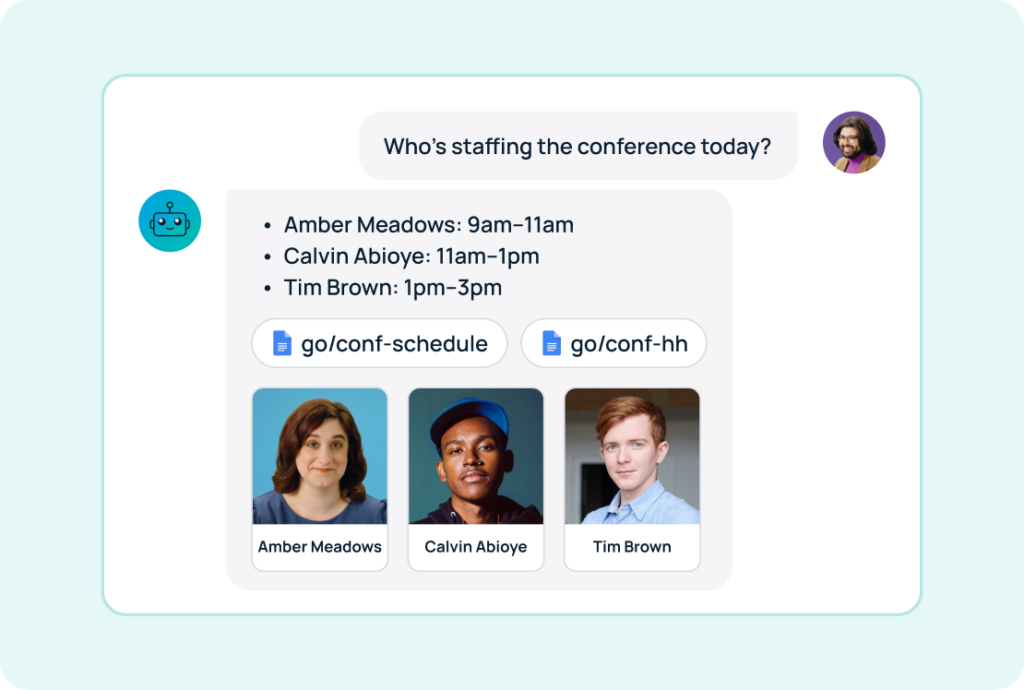
The day of the conference, you want to confirm your on-the-ground team. You use GoSearch and type in “who’s staffing the conference today?” The GoAI chatbot returns a full conference schedule, a list of people working specific time slots at your booth, and details for the post-conference happy hour your coworker planned.
You haven’t met that coworker before, so you click on their name to open up GoProfiles, where you can read about their role, personal interests, and accomplishments within your org. Now, you have all the info you need to maximize your time at the conference and make connections.
Unlocking your enterprise’s future with KM
The right enterprise knowledge management system can transform daily workflows at your company. Employees can work more efficiently, leading to increased productivity and engagement.
Our company is all about productivity. That’s why we leverage our own tools to power a four-day work week, so we can maximize engagement without sacrificing output.
Ready to boost resource access and unlock your employees’ potential? Book a demo with GoSearch and ask us about our bundle of knowledge management products.
Frequently Asked Questions (FAQ)
What is the difference between enterprise knowledge management and enterprise search?
Enterprise knowledge management is the overall strategy and system for managing knowledge. Enterprise search is a core component that helps users find information across tools.
Do enterprise knowledge management systems replace wikis?
No. Wikis remain important, but EKM systems extend beyond them by connecting multiple tools and adding AI-powered discovery.
Can AI replace knowledge management?
AI enhances knowledge management, but it cannot replace the need for governed, accurate, and well-structured enterprise knowledge.
How does enterprise knowledge management support AI initiatives?
By providing clean, permission-aware, and connected data, EKM systems prevent hallucinations and improve AI accuracy.
Who owns enterprise knowledge management?
EKM is typically shared across IT, operations, and business teams, with executive sponsorship to ensure adoption and governance.
Search across all your apps for instant AI answers with GoSearch
Schedule a demo