Need a little productivity boost? Join our monthly newsletter and we'll go/link you to the latest tips and trends in tech!
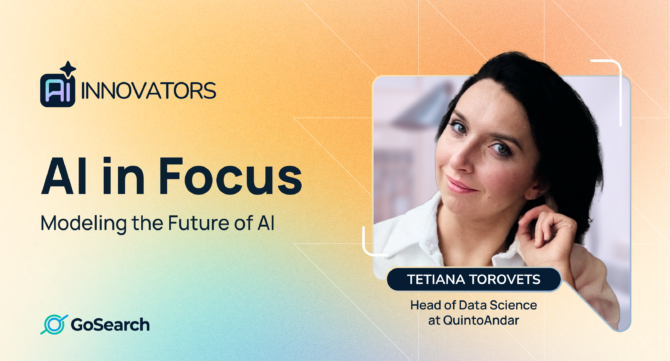
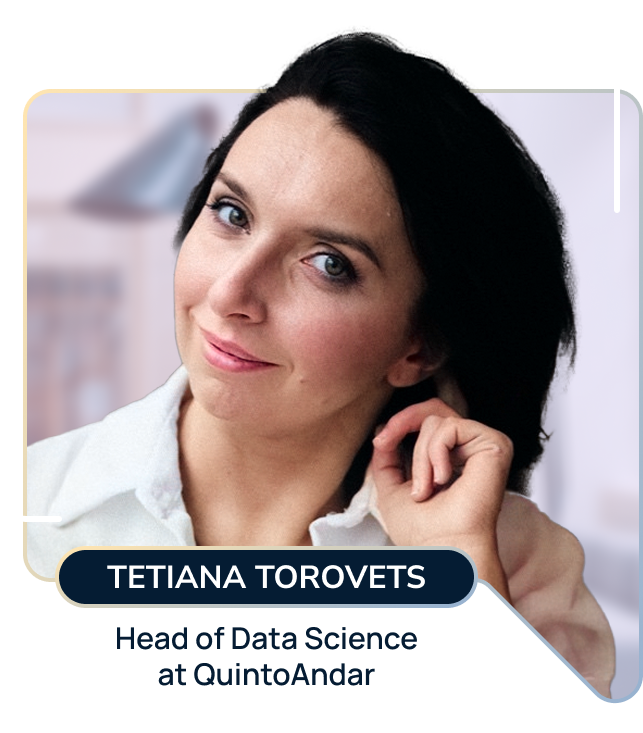
At GoSearch, our AI Innovators series spotlights the visionary leaders driving real change at the intersection of AI and enterprise innovation. In this edition, we sat down with Tetiana Torovets, Head of Data Science at QuintoAndar, Latin America’s largest property tech ecosystem, to explore how agentic AI, synthetic data, and pragmatic strategy are shaping the future of work.
With a background in applied mathematics and over 15 years of experience in data science, Tetiana brings a unique blend of curiosity, technical rigor, and operational pragmatism to her work, leading AI adoption across complex platforms.
Don’t miss a moment! Start following us on LinkedIn.
Tell us a bit about your background and what led you to AI.
Tetiana: I’m originally from Ukraine and have lived in Portugal for the past three years. My educational background is in applied mathematics, which gave me a strong foundation in logic, systems modeling, and data. I’ve worked in the data science field for over 15 years.
My fascination with AI started back in university, where I was drawn to the idea that complex real-world systems could be modeled mathematically. This fascination only grew as machine learning gained traction, and now, with the rise of AI, it feels like a natural evolution of my interests and career. It’s been a journey of turning curiosity into impact.
You’ve worked with both traditional machine learning and modern AI—how do you define the difference?
Tetiana: While many statisticians might argue that AI and machine learning are fundamentally the same, I see significant evolution. Traditional machine learning focused on building models based on clearly defined features and rules.
Modern AI, especially with large language models and agentic systems, goes a step further by handling more complex tasks and incorporating self-learning feedback loops. These systems are increasingly autonomous, adaptable, and capable of interacting with the environment in real time. The shift isn’t just technical; it’s about enabling more dynamic, intuitive, and impactful applications.
“AI systems today are not just learning from data—they’re learning how to learn, adapting in real time, and reshaping how we think about autonomy in software.”
— Tetiana Torovets, Head of Data Science @ QuintoAndar
You mentioned your company plans to adopt the Model Context Protocol (MCP). How has that shaped your AI development?
Tetiana: At QuintoAndar, we began developing our conversational AI platform in December. By the time MCP became popular in February, we were already deep in development. Rather than pivot midstream, we decided to fulfill our existing commitments and incorporate MCP into our platform later. We now see MCP as a critical enabler—it simplifies how AI agents communicate with external tools, making integrations cleaner and more scalable. It also democratizes development, allowing startups and large enterprises alike to work within a standardized framework. While it still needs maturity, we’re confident MCP will become a cornerstone of agentic AI architecture.
What does your current AI strategy look like at QuintoAndar?
Tetiana: Our AI strategy is pragmatic and ambitious. We embrace early adoption where it aligns with our business goals. We are investing in agentic architecture as a way to scale operations while maintaining the personal and high-touch communication that sets us apart. Our agents aren’t just technical tools; they’re integral to how we envision customer experience. From recommendation engines to user support, we’re embedding AI across every stage of our operational pipeline.
Are you using AI agents in production today?
Tetiana: Yes, we are. In the last month alone, we started testing two AI-driven chatbot solutions. One is focused on revamping customer support, where human oversight is still part of the process. The other is a recommendation assistant that helps users find their dream home faster and with less friction. We see enormous opportunity in automating these touchpoints, especially given the complexity and scale of our property tech ecosystem. We identify new ways to improve responsiveness and user satisfaction with each implementation.
“Agentic AI isn’t theoretical for us—it’s in production, improving customer experience in real time.”
— Tetiana Torovets, Head of Data Science @ QuintoAndar
How do you think hardware and software will evolve as AI continues to grow?
Tetiana: I believe that in the next decade, we won’t be using smartphones in the same way we do today. AI will fundamentally reshape how we interact with both hardware and software. Voice interfaces will become more dominant. Wearables or lightweight interfaces could replace traditional screens. And yes, while it sounds futuristic, direct brain interfaces might even be on the horizon. What’s clear is that the old ways of interaction are giving way to more intuitive, seamless, and intelligent experiences.
What advice would you give to young people preparing for an AI-driven future?
Tetiana: The best advice I can give is: stay curious. The world is changing so rapidly that it’s hard to predict what specific hard skills will be in demand. But curiosity will always be essential. It drives learning and adaptation. I also encourage young people to go deep in a field they’re passionate about—whether it’s science, art, or linguistics. AI will have a harder time replacing people who are experts in niche, complex domains.
How do you balance innovation and responsibility in AI?
Tetiana: Responsibility starts with regulation. We follow Brazil’s LGPD standards and collaborate closely with our legal team. On the innovation side, it comes down to having the right structure. We dedicate a portion of our team’s time to R&D and early-stage prototypes. This ensures that innovation doesn’t become an afterthought. Our OKRs include space for exploration, which helps create a culture of experimentation.
What challenges do you anticipate with continued AI adoption?
Tetiana: Resistance to change is always a factor, especially in traditional organizations. I’ve seen this during the early days of machine learning, and it still applies now. Another big challenge is balancing performance with cost and latency. More advanced models often deliver better results, but they can be slower and more expensive. Navigating that tradeoff is complex. We address it by using different LLMs for different tasks, rather than committing to a single provider.
“The real challenge in AI isn’t just building smart models—it’s balancing performance, latency, and cost while keeping the user experience seamless.”
— Tetiana Torovets, Head of Data Science @ QuintoAndar
What’s one AI myth you wish more people understood?
Tetiana: That AI will turn against humans. I don’t believe in that dystopian narrative. Even if we eventually unlock artificial general intelligence (AGI), I believe we will develop the tools and governance to control it. For now, AI is a powerful assistant—not a threat.
What are your thoughts on GoSearch and the future of workplace productivity tools?
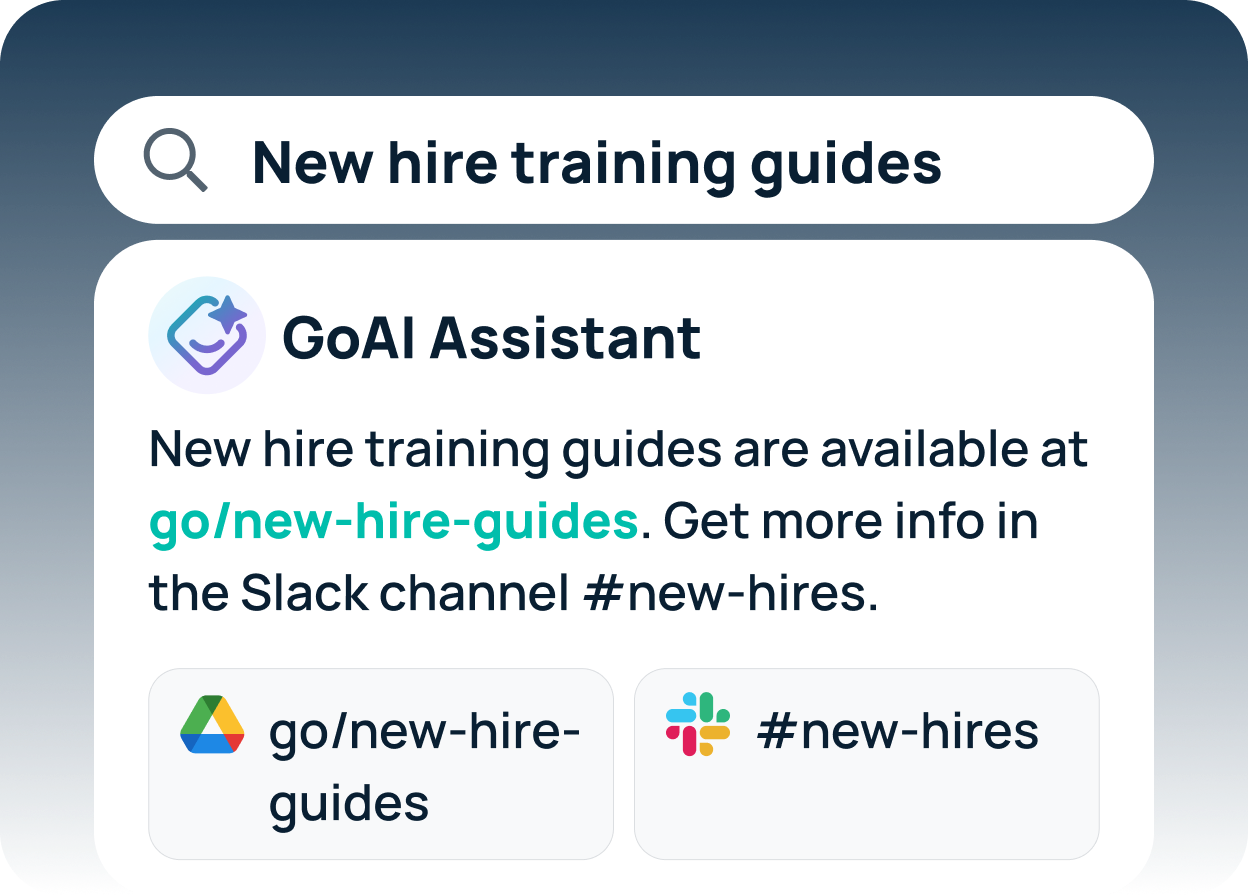
Tetiana: Throughout our conversation, we’ve focused a lot on how AI can enhance the customer journey in B2C environments. But internal productivity is just as critical. That’s where platforms like GoSearch come in. Centralizing knowledge across tools and enabling intelligent, federated search dramatically improves how teams access information, make decisions, and collaborate. Especially in large organizations, being able to instantly find what you need—whether it’s from Slack, Confluence, Google Drive, or elsewhere—can save hours of work each week.
GoSearch is positioned to transform internal workflows by replacing fragmented, app-by-app searching with unified, AI-powered discovery. That kind of tool doesn’t just make work faster—it makes teams smarter. The future of work will be built around systems like these, where productivity isn’t about doing more, but doing better with less friction.
“We talk a lot about AI transforming customer experience—but it’s also redefining how we work internally. GoSearch is part of that future.”
— Tetiana Torovets, Head of Data Science @ QuintoAndar
If you weren’t working in AI, what would you be doing?
Tetiana: I’d probably be a psychologist. People often open up to me, and I enjoy listening. I think I have a talent for creating safe spaces where people feel heard. Maybe that will be the second chapter of my career someday.
Closing Thoughts: Why Workplace Productivity Will Never Be the Same
While much of the AI conversation today centers around customer experience and external applications, Tetiana reminds us of a critical but often overlooked frontier: internal productivity. Tools like GoSearch—which unify enterprise knowledge and enable AI-powered search across platforms—represent the next major leap in workplace transformation.
By connecting siloed systems, enabling faster decision-making, and delivering contextual answers when and where teams need them, solutions like GoSearch are poised to reshape how modern enterprises operate. As agentic AI becomes embedded in daily workflows, businesses that adopt these tools won’t just move faster—they’ll think faster, respond smarter, and work more collaboratively than ever before.
In this new era of intelligent work, the future belongs to those who build with both purpose and possibility in mind.
Personal access to agentic enterprise search, free with GoSearch.
Brandon Most is Head of Marketing at GoLinks, GoSearch, and GoProfiles, where he helps enterprise teams navigate the AI landscape and deploy tools that actually improve how work gets done. With nearly 20 years of SaaS marketing experience, he connects buyers with solutions that deliver measurable impact — and advises the boards and executive teams of several venture-backed startups.
Two-time founder Rohit Chikballapur on why production-ready AI is about verification, not perfection, the own-vs-rent framework, and why distribution beats building.