


Key Takeaways
- AI decision models provide a structured decision layer for agents. They return choices, scores, predicates, or probabilities for tasks such as classification, routing, verification, escalation, and policy evaluation.
- Decision models are not complete AI agents. They still require enterprise context, permissions, business rules, tool integrations, workflow execution, and human-escalation processes.
- Reliable decisions depend on reliable context. Current, relevant, and authorized information is essential; confidence scores must be calibrated and validated against real company data.
- The market offers a range of hosted and open-weight options. Models such as Jev, OpenAI Decisions API, Microsoft-Decision-1, Cloudflare Clef, Perplexity Decider, Liquid AI D1, and others differ in cost, latency, modalities, deployment, licensing, and customization.
- GoSearch has built-in decision model capabilities that complement enterprise decision models by connecting structurured decision-making with enterprise context and action. It retrieves information across connected workplace systems, supports permission-aware answers, and helps agents execute workflows after a decision is made.
What are AI Decision Models? Tools, Use Cases, and Enterprise AI Architecture
AI decision models help agents make fast, structured choices without generating a long conversational response. Jev, OpenAI Decisions API, Microsoft-Decision-1, Cloudflare Clef, Perplexity Decider, and open-weight models now compete for workloads such as classification, routing, scoring, verification, and escalation.
These models solve the decision layer of an AI agent architecture. They do not automatically provide the enterprise context, permissions, search, or workflows that agents need to make reliable decisions. GoSearch complements AI decision models by retrieving information across connected workplace systems and helping agents take action after a decision is made.
This guide explains how AI decision models work, compares the current options, and shows where GoSearch fits into a complete enterprise AI stack.
What are AI decision models?
AI decision models evaluate application state and return a structured choice, score, predicate, or probability instead of generating a long text response.
For example, an application might ask a decision model to:
- Select the next tool an agent should call.
- Classify a support request.
- Decide whether a case needs human review.
- Score the risk of a transaction.
- Determine whether a request meets a policy.
- Route work to the right team.
- Select between approved workflow actions.
A conventional large language model can perform these tasks, but it may generate more text, use more compute, and produce less predictable outputs than an application needs. A decision model narrows the task to a defined set of choices.
A typical output might look like this:
- text
- Download
- Copy
- decision: “eligible_for_submission”
- confidence: 0.94
- next_action: “create_expense_approval”
The application can then validate the result and decide whether to execute the next action.
How do AI decision models work?
AI decision models accept application state and a typed decision request. They then return a structured result, usually with a probability or confidence estimate.
A decision request might ask:
- text
- Download
- Copy
- Question: Should this customer complaint be escalated?
- Choices: [“resolve_automatically”, “route_to_support”, “escalate_to_manager”]
- Context: [customer history, complaint text, policy, account status]
- The model may return:
- text
- Download
- Copy
- route_to_support: 0.81
- escalate_to_manager: 0.14
- resolve_automatically: 0.05
The surrounding application remains responsible for deciding what confidence threshold is acceptable. A low-risk classification may tolerate a lower threshold. A financial approval or security decision may require a much higher threshold and a human review step.
Which AI decision models are available in 2026?
The AI decision-model market expanded rapidly after TypeSafe introduced Jev in September 2026. The comparison below is based on the Forbes article and copy supplied for this article.
| Model or project | Provider | Deployment or access model | Primary capabilities | Pricing or availability reported in the source | Best fit |
| Jev | TypeSafe | Hosted API | Typed choices, scores, and yes-or-no decisions with probabilities | Starting at $0.042 per million input tokens, with no output-token charge | High-volume decisions and agent routing |
| OpenAI Decisions API | OpenAI | Hosted API | Yes-or-no predicates, multiple-choice decisions, and numerical scoring over text and images | $0.10 per million input tokens, with no output-token charge | Teams already using OpenAI APIs |
| Microsoft-Decision-1 | Microsoft | Microsoft Foundry and OpenRouter | Classification, agent routing, verification, and workflow controls | $0.042 per million input tokens | Microsoft-centered enterprise applications |
| Clef and Clef Flash | Cloudflare | Workers AI and open-weight deployment options | Fast classification and routing, especially near the network edge | Verify current pricing and availability | Low-latency and edge workloads |
| Clef-omni | Cloudflare | Cloudflare ecosystem | Structured decisions over text, images, audio, and video | Verify current access and pricing | Multimodal moderation and classification |
| Pplx-Decider V1.1 27B | Perplexity | Hosted API and open weights | Multimodal structured decisions | $0.02 per million input tokens reported in the source; Apache 2.0 open-weight license | Hosted inference or self-hosting |
| Liquid AI D1 | Liquid AI | Hosted API | Rapid decisions over text and images | $0.04 per million input tokens reported in the source | Lightweight multimodal workloads |
| Liquid AI D1-3B and D1-Omni-600M | Liquid AI | Open-weight, local deployment | Text, image, and multimodal decisions | Open-weight models for local deployment | Edge devices and sensitive data |
| Mercury Decide | Inception | OpenRouter, including a free rate-limited option | Choices, scores, and yes-or-no decisions | Free rate-limited access reported in the source | Prototyping and experimentation |
| Solar Decide and Solar Decide Flash | Upstage | Hosted model access | Classification, scoring, and workflow routing | Verify current pricing and availability | Long-context classification |
| Tev1-4B-Experimental | Together AI | Hosted API and downloadable project assets | Predefined-choice decisions | $0.042 per million input tokens reported in the source | Smaller-model experimentation |
| Kev | Independent open-source project | Open-source and local deployment | Decision outputs through a Jev System One API implementation | Apache 2.0 license; models from 0.8B to 27B parameters | Self-hosting and fine-tuning |
| Laya | Convai Innovations | Open-weight, local deployment | Routing, scoring, and classification | Lightweight English and multilingual models | Fast local decisions |
| Drex | Nace.AI | Specialized commercial model | Multiple structured questions in one forward pass | Verify current access and pricing | Compliance and document classification |
| Span-01 and Span-01 Lite | Respan | Commercial and free model options | Unsafe-action detection, frustration detection, and escalation | Free Lite version reported in the source | Agent monitoring and guardrails |
| Strands Decider | Strands Agents ecosystem | Open source, local deployment, and Amazon Bedrock | Structured decisions with confidence estimates | Verify current Bedrock access and pricing | Developers using Strands Agents |
| SemIf, formerly OpenJev | Community project | Open models and local execution | Extracts option probabilities from open models | Verify license and maintenance status | Open-model experimentation |
| Verdict, Von, and other GitHub projects | Independent developers | Varies by repository | Compact classifiers, adapters, and decision engines | Licensing varies | Research and custom deployment |
What do these AI decision models have in common?
Most AI decision models share four characteristics:
- Structured outputs: They return choices, scores, predicates, or probabilities.
- Application-state inputs: They evaluate information supplied by an application.
- High-volume use cases: They target decisions that may occur thousands or millions of times.
- Narrower workloads: They focus on classification, routing, verification, scoring, or escalation rather than open-ended writing.
These models are not interchangeable. They differ in:
- Accuracy and confidence calibration.
- Latency and throughput.
- Text, image, audio, and video support.
- Hosted versus local deployment.
- Model size and hardware requirements.
- API design.
- Licensing.
- Monitoring and evaluation tools.
How are AI decision models different from AI agents?
An AI decision model makes a constrained choice. An AI agent combines several capabilities to complete a task.
A decision model may answer:
- Which tool should the agent call?
- Should this request be escalated?
- Is this transaction suspicious?
- Which category does this document belong to?
- Does this request meet a policy?
An AI agent typically needs to:
- Understand the user’s request.
- Retrieve relevant context.
- Decide what to do.
- Call a tool or API.
- Verify the result.
- Explain the outcome.
- Escalate when necessary.
Decision models provide one part of that workflow. They do not automatically provide enterprise search, identity, permissions, tool integrations, or business process execution.
This is why Jev and similar decision models should not be compared directly to GoSearch, Glean, Dust, Salesforce Agentforce, or ServiceNow AI Agents. Decision models are primarily model or infrastructure components. Agent platforms combine context, reasoning, tools, workflows, or system-specific actions.
How do AI decision models compare with enterprise search and agent platforms?
| Capability | AI decision models | AI agent platforms | GoSearch |
| Primary function | Make a structured choice | Coordinate reasoning, tools, and workflows | Retrieve enterprise context and help agents answer or act |
| Typical output | Choice, score, predicate, or probability | Answer, plan, tool call, or workflow result | Grounded answer, source context, agent response, or action |
| Enterprise retrieval | Usually supplied by the application | Depends on connectors and configuration | Core capability across connected workplace systems |
| Routing and classification | Core capability | Usually supported | Supported through agents and workflows |
| Tool execution | Usually handled by the surrounding application | Common capability | Agents can connect to actions and business tools |
| Permission handling | Must be implemented by the application | Varies by platform | Built around connected-source permissions and access controls |
| Human escalation | Can return an escalation decision | Often supported through workflow steps | Supports routing and action workflows |
| Best buyer | AI engineers and application developers | Automation, AI operations, and product teams | IT, knowledge, operations, and business teams |
| Role in the architecture | Decision layer | Orchestration and action layer | Context, search, agent, and action layer |
Why do AI decision models need enterprise context?
A decision model can structure a choice, but structure does not guarantee accuracy. The model still needs current, relevant, and authorized information.
Consider an employee who asks:
“Can I expense this software subscription, and if so, submit it for approval?”
The agent may need to retrieve:
- The current expense policy.
- The employee’s department and role.
- The approved software list.
- The purchase amount and date.
- Any exception rules.
- The correct approval workflow.
If the agent cannot access that information, its decision may be confident but wrong.
GoSearch provides the enterprise context that AI decision models need. It can search connected workplace systems, retrieve relevant information, and help an agent use that context before routing, approving, escalating, or acting.
How does GoSearch complement AI decision models?
GoSearch and AI decision models serve different layers of the agent stack.
- GoSearch retrieves relevant enterprise context.
- The decision model evaluates the context.
- The agent applies business rules and permissions.
- A connected workflow executes the approved action.
- The agent explains the result with supporting source context.
- For the expense example, the workflow might look like this:
text
Download
Copy
User request
↓
GoSearch retrieves the policy, employee context, and approved software list
↓
Decision model evaluates eligibility
↓
Agent checks permissions and confidence threshold
↓
Workflow submits the expense for approval
↓
GoSearch agent explains what happened and cites the relevant sources
GoSearch has built in a decision agent on top of the enterprise context and action layer GoSearch already has access to.
Which AI decision model should you choose?
Choose Jev for a focused, typed decision API
Jev is a fit for engineering teams that want structured decisions, probabilities, and a dedicated decision-model API.
Choose Jev when:
- Your application makes many small, repeatable decisions.
- You need typed output instead of generated prose.
- Your team wants a dedicated decision-model API.
- You can supply context and implement downstream actions.
Choose OpenAI Decisions API if you already use OpenAI infrastructure
OpenAI Decisions API may suit teams already building with OpenAI models and developer tools. The supplied source describes support for yes-or-no predicates, multiple-choice decisions, and numerical scoring over text and images.
Choose it when:
- Your application already uses OpenAI APIs.
- You want decisions in the same vendor ecosystem.
- You need text and image inputs.
- You are comparing cost and latency with specialized alternatives.
Choose Microsoft-Decision-1 for Microsoft-centered environments
Microsoft-Decision-1 is available through Microsoft Foundry and OpenRouter. The source describes classification, agent routing, verification, and workflow controls.
Choose it when:
- Your organization already uses Microsoft Foundry.
- Your agents operate in Microsoft-heavy workflows.
- You need Microsoft deployment and governance options.
- You want to test the model on your own enterprise data.
Choose an open-weight model when data control is the priority
Pplx-Decider, Liquid AI’s local models, Kev, Laya, and Strands Decider may be relevant when sensitive data cannot be sent to a hosted API.
Choose a local or open-weight model when:
- Data must remain inside your infrastructure.
- You need to customize or fine-tune the model.
- You have deployment and monitoring resources.
- You can manage licensing and probability calibration.
Open weight does not mean free to operate. Infrastructure, engineering time, observability, security, and maintenance all affect the total cost.
Choose GoSearch when enterprise context is the missing capability
GoSearch is a fit when an agent needs information from multiple workplace systems before making a decision. And by adding a decision agent, like Jev, to our platform you can have the best of both worlds.
Choose GoSearch when:
- Knowledge is distributed across many applications.
- Employees need answers grounded in internal sources.
- Agents need permissions-aware enterprise retrieval.
- Workflows need to connect search with actions.
- Business teams need to configure agents without building every integration.
- Your organization wants a model-agnostic enterprise search and agent layer.
Use GoSearch with a decision model when you need context and control
Many organizations will use both technologies:
- GoSearch retrieves relevant company information.
- A decision model returns a constrained recommendation.
- An agent applies business rules and access controls.
- A workflow tool executes the next step.
This architecture is more reliable than asking one general-purpose model to search, decide, act, and explain every request without specialized controls.
How should enterprises evaluate AI decision models?
Speed and cost matter, but accuracy and confidence calibration matter more when an incorrect decision can create financial, operational, compliance, or customer-service consequences.
1. Measure decision accuracy
Test each model on representative, labeled examples from your own workflows. Public benchmarks are useful for comparison, but they do not predict performance on your company’s data.
2. Test confidence calibration
A model that returns a probability of 0.95 should be correct close to 95 percent of the time in the relevant operating environment.
Poor calibration can cause an agent to automate decisions that should have gone to a person.
3. Measure latency and throughput
Test response time under realistic traffic. A model with a low per-token price may still be expensive if it creates delays, retries, or additional manual work.
4. Compare false-positive and false-negative costs
The right model depends on the consequences of each error. Sending a low-priority case for review may be acceptable. Automatically approving a fraudulent transaction may not be.
5. Evaluate context and permissions
Test whether the complete system can retrieve current, authorized information before making a decision. A highly accurate model can still produce an unsafe result when it receives incomplete or unauthorized context.
6. Measure the completed workflow
Evaluate more than model output. Track:
- Cost per completed workflow.
- Manual-review rate.
- Escalation rate.
- Time to resolution.
- Tool-call failures.
- Permission failures.
- Recovery when the model is uncertain.
- Accuracy across departments and data types.
Why are benchmarks not enough?
The recent Forbes article references OpenRouter usage rankings and Opper AI’s Jevman benchmark. These measurements can provide useful signals, but they do not replace evaluation on enterprise data.
Usage volume measures adoption, not necessarily accuracy. A game-based benchmark can measure rapid decision-making, but success in a game does not prove reliability in finance, healthcare, security, HR, or customer operations.
For enterprise use, the most meaningful benchmark is whether the complete system makes the right decision with the right information, within the required time, and at an acceptable cost.
AI decision models are becoming a new infrastructure layer
The growth of Jev alternatives reflects a broader change in AI application design. Instead of using one large language model for every task, developers can combine:
- A reasoning model for complex or ambiguous work.
- A decision model for fast structured choices.
- A conventional classifier for narrow categories.
- Deterministic rules for known policies.
- Enterprise search for current company context.
- Workflow automation for approved actions.
This approach can reduce cost and latency while making system behavior easier to test. It also creates a design challenge. Teams must decide which layer owns retrieval, decision logic, permissions, monitoring, and execution.
GoSearch fits into this architecture as the enterprise context and action layer. It helps agents find information across connected workplace systems, then supports the workflows that follow from the decision.
Search is the floor. Agents are the ceiling. Decision models provide the control layer in between.
Explore GoSearch for enterprise AI agents
What is GoSearch? GoSearch is an AI enterprise search knowledge layer powering custom agents and no-code workflows. Teams get trusted answers and automation from their stack, made simple for every employee.
AI decision models help agents choose what to do. GoSearch helps them find the information they need and act across workplace systems.
Search across all your apps for instant AI answers with GoSearch
Schedule a demo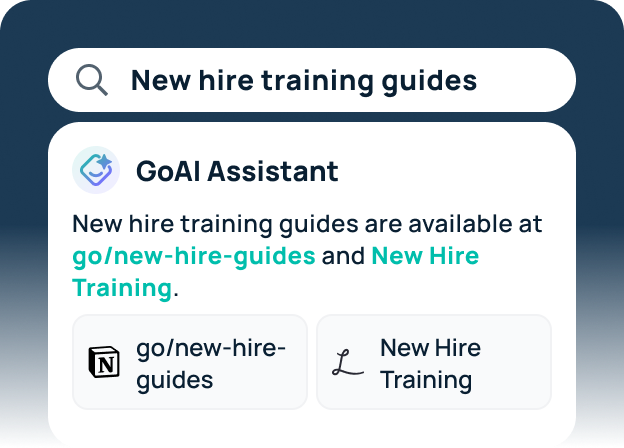
Frequently Asked Questions
AI decision models evaluate application state and return structured choices, scores, predicates, or probabilities instead of generating a conversational response. They are designed for high-volume tasks such as routing, classification, verification, scoring, and escalation.
Jev alternatives described in the supplied source include OpenAI Decisions API, Microsoft-Decision-1, Cloudflare Clef, Perplexity Decider, Liquid AI D1, Mercury Decide, Solar Decide, Kev, Laya, Drex, and Strands Decider. The right alternative depends on accuracy, latency, deployment, licensing, modality, and cost requirements.
No. A decision model makes a constrained choice, while an AI agent combines language understanding, retrieval, decisions, tool use, and workflow execution. A decision model can be one component inside an AI agent.
GoSearch retrieves relevant information from connected enterprise systems before a decision model evaluates a request. After the decision, GoSearch agents and connected actions can help answer the user, route work, update a system, or start a workflow.
Open-weight models may have no model licensing fee, but they still require infrastructure, deployment, monitoring, security, and engineering resources. Licensing terms also vary, so teams should verify whether a model can be used commercially.
Enterprises should measure decision accuracy, confidence calibration, latency, throughput, cost, false positives, false negatives, manual-review rates, permission failures, and completed-workflow outcomes using representative internal data.