Need a little productivity boost? Join our monthly newsletter and we'll go/link you to the latest tips and trends in tech!
Every major technology platform shift eventually produces a moment of standardization. The internet had TCP/IP. Mobile had REST APIs. Cloud computing had OAuth. These weren’t the flashiest innovations of their respective eras — but they were among the most consequential, because they turned fragmented, incompatible ecosystems into something that could scale.
Enterprise AI is approaching its own standardization moment. And the protocol at the center of it has a name most business leaders haven’t heard yet, but soon will: Model Context Protocol, or MCP.
What makes MCP worth paying attention to now is how it surfaced. Across our AI Innovators series, leaders from different industries and roles each raised it independently — without prompting — as one of the most significant developments shaping their work. That kind of unprompted convergence is a signal worth taking seriously.
The Problem MCP Is Solving
To understand why MCP matters, you first have to understand what came before it.
Every time an AI system needed to interact with an external tool — a CRM, a knowledge base, a calendar, a ticketing system — developers had to build a custom integration. That meant learning the target system’s API, writing bespoke connector code, handling authentication, managing rate limits, and then maintaining all of it as both systems evolved. Multiply that by dozens of tools across a typical enterprise, and you have an integration tax that consumes enormous engineering resources and creates a sprawling, fragile web of custom code.
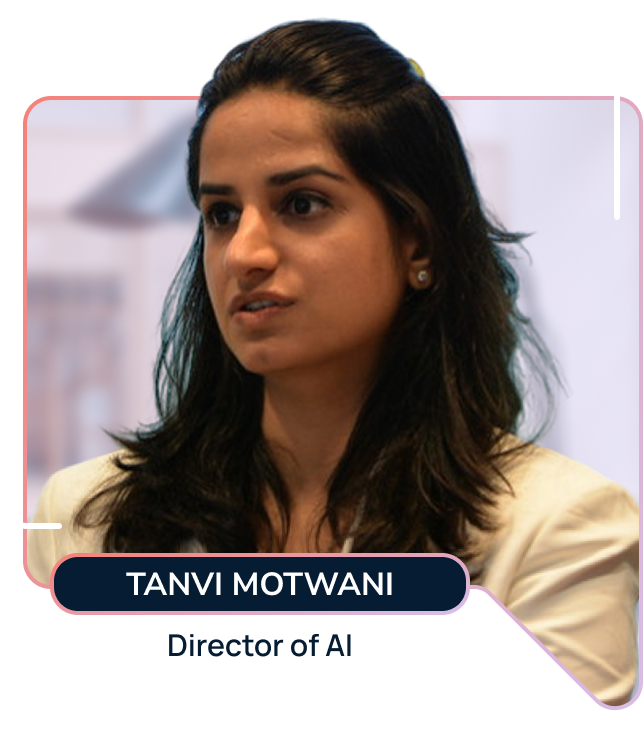
Tanvi Motwani, Director of AI, lived this problem directly. When her team needed to connect large language models to their own internal features, every connection required building from scratch:
“MCP essentially makes that work reusable across contexts; it creates a consistent way to handle permissions, manage prompts, and orchestrate workflows.”
— Tanvi Motwani, Director of AI
“Reusable across contexts” is the key. MCP doesn’t just make a single integration easier — it makes every integration built on the standard transferable. Work done once becomes infrastructure that any MCP-compatible system can leverage.
What MCP Actually Is
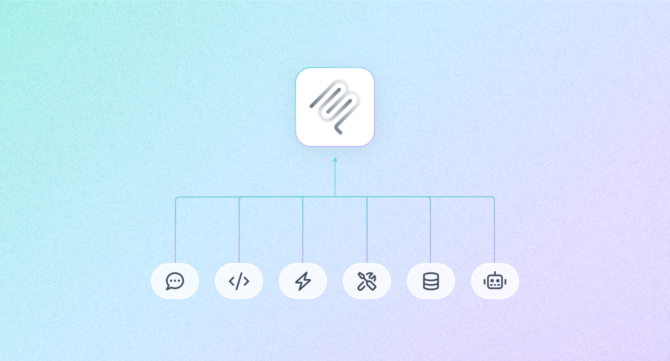
At its technical core, MCP is an open standard that defines how AI agents communicate with external tools and data sources. It establishes a common server-client architecture: tools and data systems expose themselves as MCP servers, and AI applications connect to them as MCP clients, using a shared protocol that both sides understand.
Think of it as a universal adapter. Instead of every AI application needing a custom plug for every tool it wants to connect to, MCP defines a standard plug shape. Once a tool is MCP-compatible, any MCP-compatible AI can use it — without additional integration work.
Mudit Garg, SVP of AI Strategy, Partnerships & GTM, Yellow.ai, offered the clearest functional description of what MCP enables at scale:
“MCP is essentially a universal translator for AI agents. It’s an open standard designed to enable interoperability across different systems and agents — like the secret sauce that allows AI to scale effectively within enterprise ecosystems. It provides a simple, standardized server-client architecture for agents to read, write, and share data. So instead of reinventing the wheel for each integration, agents can talk to each other and access the right context through a common language.”
— Mudit Garg, SVP of AI Strategy, Partnerships, and GTM Operations @ Yellow.AI
Beyond reducing engineering overhead, MCP also standardizes how context, permissions, and prompts are handled across connections. This matters. One of the persistent challenges in enterprise AI has been ensuring that AI systems respect access controls as they move across systems — that a query about one thing doesn’t inadvertently surface data a user isn’t authorized to see. MCP builds that governance framework into the protocol itself, rather than leaving it to each custom integration to implement independently.
Why It’s a Turning Point — Not Just an Improvement
The leaders in this series don’t describe MCP as a convenience. They describe it as a structural shift in how enterprise AI gets built and deployed.
For Tetiana Torovets, Head of Data Science, QuintoAndar, the significance is about what it unlocks for the broader ecosystem — particularly for organizations that don’t have the engineering resources of a tech giant.
“MCP simplifies how AI agents communicate with external tools, making integrations cleaner and more scalable. It also democratizes development, allowing startups and large enterprises alike to work within a standardized framework. While it still needs maturity, we’re confident MCP will become a cornerstone of agentic AI architecture.”
— Tetiana Torovets, Head of Data Science @ QuintoAndar
Before MCP, the integration burden created an uneven playing field. Large companies with deep engineering teams could build and maintain the connections their AI needed. Smaller companies had to make hard choices about which integrations were worth the cost and which systems their AI simply couldn’t reach. MCP changes that calculus — if a tool is MCP-compatible, any organization can connect to it at roughly the same cost.
Joji Philip, Director of Data Science, Ericsson, sees MCP as a current requirement, not a future consideration:
“Mastery of [large language models] allows teams to implement AI solutions efficiently, requiring proficiency in function calling, tool integration, MCP, finetuning of small language models, and the development of applications using agentic AI for specific use cases.”
— Joji Philip, Director of Data Science @ Ericsson
That MCP sits alongside function calling and model fine-tuning in Philip’s list of essential engineering competencies is telling. He’s not describing it as an advanced or optional capability. He’s describing it as foundational — something engineers working in enterprise AI need to understand the way they need to understand APIs or databases.
Startups vs. Incumbents: Does MCP Level the Playing Field?
One of the most interesting strategic questions around MCP is what it means for the competitive dynamics between established enterprises and the startups trying to disrupt them.
The conventional wisdom has been that large enterprises have a durable advantage in AI because they hold the data — the interfaces, the integrations, the source-of-truth systems that AI needs to be useful. New entrants have to build all of that from scratch.
MCP complicates that picture in ways that cut both directions.
On one hand, MCP reduces the integration moat. If a startup can connect to the same enterprise tools as an incumbent, using the same standardized protocol, at a fraction of the former cost, then integration depth is no longer as durable a competitive advantage. The startup building an AI-powered workflow tool doesn’t need to spend a year building Salesforce, Workday, and ServiceNow connectors. It needs to be MCP-compatible and benefit from the ecosystem of MCP servers those platforms have exposed.
“AI overall has leveled the playing field. Before, the big differentiator was computing power. If you had thousands of GPUs, you had the advantage. Today, with LLMs accessible via APIs and fine-tuning at lower cost, startups can compete with fewer resources. MCP accelerates this shift by giving everyone a standardized, open way to connect tools and workflows.”
— Tanvi Motwani, Director of AI
On the other hand, MCP doesn’t eliminate the data advantage — it shifts where that advantage is exercised. Incumbents who move quickly to expose their data through MCP-compatible interfaces become the systems that every AI agent wants to connect to. They become infrastructure. The question isn’t whether they’ll be integrated into agentic workflows; it’s whether they’ll be the authoritative source or a second-tier option.
“We’re seeing two types of players emerge: the incumbents, like extensive CRM or database providers, who already control massive amounts of data, and the disruptors — startups — who are building new ways to extract value from it. The challenge is that no single vendor can power the AI future alone, because most enterprises run on complex, distributed systems. That’s why standardization is key.”
— Mudit Garg, SVP of AI Strategy, Partnerships, and GTM Operations @ Yellow.AI
MCP doesn’t resolve the startup-vs-incumbent tension so much as it reframes it. The advantage shifts from who has the most integrations to who builds the best experiences on top of a shared integration foundation. That’s a different kind of competition — and arguably a more interesting one, because it’s won on product quality rather than engineering resources.
The Road to MCP as De Facto Standard
Several leaders in this series make the same prediction with notable confidence: MCP will become the default standard for how AI agents exchange context and interact with tools. It’s worth examining what would need to be true for that to happen.
Garg describes the adoption trajectory in terms that echo how previous enterprise standards have spread:
“I believe MCP is on track to become the de facto standard for how AI agents exchange context and data going forward. Soon, companies will be running more AI agents than SaaS tools, and those agents will need seamless, real-time access across platforms to deliver value.”
— Mudit Garg, SVP of AI Strategy, Partnerships, and GTM Operations @ Yellow.AI
The comparison to SaaS tools is striking. Most large enterprises today run hundreds of SaaS applications — some estimates put the average above 350 for enterprise-scale organizations. If AI agents proliferate at the rate some practitioners expect, the number of agents an enterprise runs could exceed the number of SaaS tools within this decade. Each of those agents will need to communicate with tools, retrieve context, and take actions. Without a common standard, the integration complexity becomes unmanageable. With one, it scales.
Enterprise adoption of MCP is unlikely to unfold as a clean migration. Organizations won’t rebuild their AI infrastructure around it overnight. They’ll integrate it progressively — as they build new systems and as the ecosystem of MCP-compatible tools grows. The standard will gain momentum not through mandates but through network effects: as more tools become MCP-compatible, the cost of not adopting it rises for everyone building on top of it.
What This Means for Enterprise AI Buyers
If you’re evaluating AI products rather than building them, MCP matters for a specific practical reason: it’s becoming a useful filter for assessing vendor architecture.
An AI product that relies entirely on proprietary, custom integrations is limited by that vendor’s engineering capacity and development priorities. An AI product built on MCP-compatible architecture can, in principle, connect to any tool that exposes an MCP server — which, as adoption grows, will increasingly mean any enterprise tool worth connecting to.
This isn’t a reason to require MCP compliance as a checkbox in every RFP today. But it is a reason to ask vendors about their integration architecture — specifically, whether they’re building toward open standards, and what that means for the flexibility and longevity of the investment.
Tanvi Motwani’s framing of what MCP ultimately delivers to the end user is the right lens for that evaluation:
“MCP doesn’t just simplify engineering; it makes LLM-powered systems more contextual and personalized. Once prompts, tools, and workflows are bundled in a structured way, everything ‘just works.’ That shift from ad-hoc connectors to a standardized protocol is a turning point for the ecosystem.”
— Tanvi Motwani, Director of AI
“Everything just works” is the promise of every successful standard. TCP/IP made the internet just work. OAuth made third-party app authorization just work. MCP is positioned to make AI agent integrations just work — and the practitioners closest to the problem are increasingly confident it will.
The question for enterprise AI buyers isn’t whether MCP will matter. It’s whether the vendors they’re evaluating are building toward it — or away from it.
Search across all your apps for instant AI answers with GoSearch
Emily Deuser is Content Manager at GoLinks, GoSearch, and GoProfiles, where she helps enterprise teams cut through the noise around workplace AI and find tools that actually make knowledge accessible. She specializes in turning complex productivity challenges into clear, actionable guidance that helps teams work smarter every day.
Six AI agent platforms compared on connectivity, workflow automation, citations, and pricing — plus five criteria for evaluating any platform against your stack.