


GoSearch is an enterprise AI platform that connects to the tools and systems your company already uses, letting teams search across them, chat with an AI assistant that has real context, and build no-code agents and automated workflows without writing code. Anthropic released Claude Sonnet 5 on June 30, 2026, calling it the most agentic Sonnet model to date, and it’s now available across GoSearch’s no-code agent builder, workflow automation, and GoAI, GoSearch’s conversational AI chat.
This post covers what actually changed in Sonnet 5, how it compares to its predecessor, and what it means for teams building agents and automating work inside GoSearch.
Quick answer: Claude Sonnet 5 is Anthropic’s latest mid-tier model, built to bring flagship-level agentic performance, planning, tool use, and multi-step task execution, into a faster, lower-cost model class. It scores 80.5% on the Terminal-bench 2.1 agentic coding benchmark, up from 67% for Sonnet 4.6, and Anthropic reports it approaches Claude Opus 4.8 on several complex tasks at a fraction of the cost. For enterprise teams, that means agents that used to require a flagship-tier model can often run on Sonnet 5 instead, with adjustable effort levels to balance cost and performance per task. In GoSearch, Sonnet 5 is available alongside models from OpenAI and Google as part of the platform’s multi-LLM approach, all with Zero Data Retention.
What’s new in Claude Sonnet 5?
Anthropic built Sonnet 5 around a single theme: agentic execution. Where earlier Sonnet models were strong at answering questions and writing code, Sonnet 5 is designed to plan a task, use tools like browsers and terminals, execute multiple steps in sequence, and keep working through longer task chains without losing track of the goal.
A few specific changes stand out. Anthropic reports that Sonnet 5 has a lower overall rate of problematic behaviors compared to Sonnet 4.6 and is safer to deploy in agentic settings, while independent coverage from TechCrunch noted that testers observed the model reviewing and validating its own work without being prompted to, a meaningful shift for agents that run with minimal supervision. The model also introduces adjustable effort levels, letting teams dial performance up for harder tasks or down for routine ones, rather than choosing a single fixed model tier for everything.
Sonnet 5 also ships with an updated tokenizer, meaning the same input may now map to somewhat more tokens than it did under Sonnet 4.6, worth factoring in if you’re estimating usage against a token-based plan. However, GoSearch does not price based on token usage.
Claude Sonnet 5 vs. Sonnet 4.6
| Claude Sonnet 4.6 | Claude Sonnet 5 | |
|---|---|---|
| Agentic coding (Terminal-bench 2.1) | 67% | 80.5% |
| Best for | Standard coding and chat tasks | Multi-step agentic work, tool use, and complex coding |
| Effort control | Fixed performance tier | Adjustable effort levels to balance cost and performance |
| Self-verification | Limited | Checks its own output on complex tasks without being asked |
| Relative capability | Strong for its tier | Approaches Opus-class performance on several complex tasks |
The practical takeaway: Sonnet 5 doesn’t just do the same tasks a little better, it closes much of the gap that used to require stepping up to a flagship-tier model. For many enterprise use cases, that changes the default choice from “start with the flagship model and downgrade if it’s too expensive” to “start with Sonnet 5 and step up only when a task genuinely needs it.”
How does the model power enterprise AI agents and workflows?
The clearest signal of what Sonnet 5 is built for comes from how early enterprise users describe it. Anthropic’s case studies point to insurance workflows, where computer-use agents built on Sonnet 5 reliably handle submission intake and claims processing on existing systems, and to automation platforms like Zapier, where testers found the model could complete multi-step business tasks, like updating a CRM and sending a follow-up communication, end to end without stalling partway through the way earlier models sometimes did.
That pattern matters for the kind of work GoSearch customers build agents around: tasks that touch multiple systems, require several steps done in the right order, and need to actually finish rather than hand back a partial result.
Benefits by team:
- IT and platform teams get a model strong enough for demanding agentic workflows, like multi-system automations or computer-use tasks, without defaulting straight to flagship-tier pricing.
- Engineering teams get a meaningful step up in coding and debugging performance, with accuracy Anthropic positions as comparable to Opus-class models on many tasks.
- Operations and RevOps teams get more reliable end-to-end task completion for workflows that span multiple tools, like updating a CRM record and triggering a follow-up action, instead of agents that stall halfway through.
- Anyone building agents in GoSearch’s no-code builder gets adjustable effort levels, so a routine agent can run lean while a complex one can be dialed up for harder reasoning.
How does GoSearch use Claude Sonnet 5?
GoSearch has always taken a multi-LLM approach, giving teams a choice across models from OpenAI, Anthropic, and Google Gemini, all with Zero Data Retention, rather than locking customers into one provider’s roadmap. Adding Claude Sonnet 5 extends that choice across three parts of the platform:
No-code agent builder: Sonnet 5 is available as a model option when building an agent from scratch or from a template, particularly well suited to agents that need to plan across multiple steps or use tools like browsers and terminals.
Workflow automation: Scheduled and triggered workflows that touch multiple systems, like updating records across a CRM and a ticketing tool in the same run, can be configured to use Sonnet 5 for its stronger multi-step execution.
GoAI chat: Conversational search and chat through GoAI can draw on Sonnet 5 for tasks that benefit from stronger reasoning and tool use, alongside GoSearch’s other supported models.
As with GoSearch’s other supported models, GoSearch doesn’t pass query or token costs back to users, so choosing Sonnet 5 for a given agent or workflow is a decision about which model fits the task, not about managing a separate bill.
How do I get started?
Claude Sonnet 5 is available now as a model option across GoSearch’s agent builder, workflow automation, and GoAI chat. No migration is required for existing agents or workflows built on other models. For agents that involve multiple steps, tool use, or tasks that previously required a flagship-tier model, Sonnet 5 is worth testing as a faster, more cost-efficient alternative.
New to GoSearch? Sign up for your free account or schedule a personalized demo.
Search across all your apps for instant AI answers with GoSearch
Schedule a demo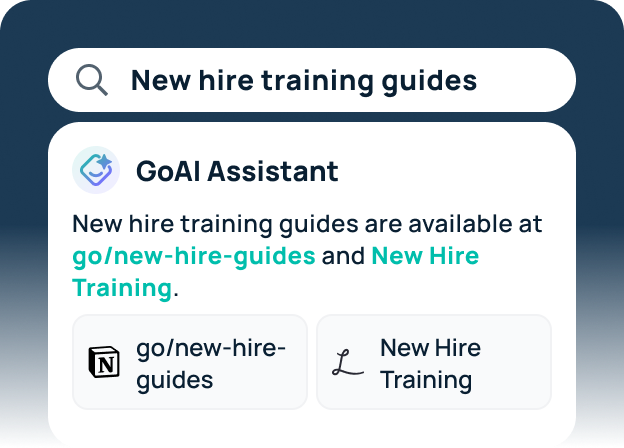
FAQ
Claude Sonnet 5 is built around stronger agentic execution: planning across multiple steps, using tools like browsers and terminals, and completing longer task chains with less supervision. It scores 80.5% on the Terminal-bench 2.1 agentic coding benchmark, up from 67% for Sonnet 4.6, and introduces adjustable effort levels so teams can balance cost and performance per task rather than being locked into a single fixed tier.
Sonnet 5 is a substantial step up in agentic coding, tool use, and multi-step task completion, with Anthropic reporting performance on several complex tasks that approaches its flagship Opus 4.8 model. It also checks its own output on complex tasks without being explicitly asked, a behavior not consistently present in Sonnet 4.6. The tokenizer also changed, so the same input may map to somewhat more tokens than before.
Yes. GoSearch includes Claude Sonnet 5 in its model lineup, available across the no-code agent builder, automated workflows, and GoAI chat. It joins GoSearch’s multi-LLM support for models from OpenAI and Google Gemini, all with Zero Data Retention, giving teams a choice of frontier models without managing separate API keys or infrastructure for each provider. Model selection works per agent or workflow, so teams can pick the model that fits each use case.
Yes, particularly for workflows that span multiple systems or require several steps completed in sequence. Anthropic’s reported testing includes insurance workflows and multi-step business automations that completed end to end where earlier models sometimes stalled partway through. For enterprise teams, reliability matters as much as raw benchmark performance when agents run with minimal supervision and need to be trusted to finish a task correctly on their own.
No. GoSearch doesn’t pass query or token costs back to users, so selecting Claude Sonnet 5 for an agent or workflow doesn’t change your bill. The decision comes down to whether the task benefits from Sonnet 5’s stronger agentic and multi-step reasoning capabilities, not to managing cost trade-offs the way you might with a direct API integration where token usage is billed separately per model.