Need a little productivity boost? Join our monthly newsletter and we'll go/link you to the latest tips and trends in tech!
The demos are impressive. An AI agent reads a brief, drafts a campaign, schedules distribution, monitors performance, and iterates — all without a human touching the keyboard. Another screens hundreds of job applications, scores candidates against role criteria, and surfaces a shortlist in minutes. A third reviews a contract, flags risk clauses, and suggests redlines in seconds.
The capability is real. The question every serious enterprise leader is wrestling with isn’t whether AI agents can do these things. It’s whether they should do them alone.
That question doesn’t have a single answer. The right level of human involvement depends on the domain, the stakes, the maturity of the model, and — perhaps most importantly — whether your organization has built the governance structures to know when an AI agent is performing well and when it has quietly gone wrong.
Across our AI Innovators series, leaders have engaged this tension more directly and honestly than most of the AI discourse allows. None of them are AI skeptics. All of them are building seriously with agents. And all of them have landed in the same place: the capability of AI agents has outpaced the governance structures needed to deploy them responsibly — and closing that gap is the defining challenge of enterprise AI right now.
Capable Isn’t the Same as Ready
The gap between agent capability and organizational readiness isn’t primarily a technology problem. It’s an institutional one. Enterprises have spent decades building processes, oversight structures, and accountability frameworks around the assumption that humans make decisions. Introducing agents that can act — not just advise — requires rebuilding those structures, and that takes time that the pace of technology is not waiting for.
That gap shows up most clearly in production. The pattern is consistent across enterprise environments: what agents can technically accomplish and what they can be trusted to accomplish are two different things — and the distance between them is where governance has to live. Code generation is one of the most instructive examples — a domain where AI can produce sophisticated output quickly, but where the consequences of undetected errors are significant. Romain Sestier, Co-Founder and CEO of StackOne, puts it directly:
“We still have a robust human-in-the-loop process… but thanks to our AI agent, the velocity at which we can do it and the depth and complexity of the integrations we can handle are much greater.”
— Romain Sestier, Co-Founder and CEO of StackOne
This framing — humans still primarily driving, agents dramatically amplifying — is probably the most accurate description of where enterprise AI agents actually are today, as opposed to where the most enthusiastic projections place them. The agents aren’t replacing the human decision-maker. They’re compressing the time and expanding the capacity of the human decision-maker. That’s genuinely valuable. It’s also importantly different from autonomy.
The challenge is precise: the AI produces outputs that are often good, sometimes excellent, and occasionally wrong in ways that aren’t immediately obvious. Enterprise-grade quality requires that every output be reliable.
“Having the right checks and balances was one of our main priorities from day one.”
— Romain Sestier, Co-Founder and CEO of StackOne
The human in the loop is the mechanism that bridges that gap — until the agent’s reliability can be independently verified at the required standard. That’s not a workaround. It’s the architecture.
When Autonomy Becomes a Liability
Not all domains carry equal risk when AI agents make mistakes. A misformatted report is annoying. A biased hiring decision is a legal and ethical crisis. Understanding where the consequences of AI error are most severe is the starting point for any serious conversation about where human oversight must remain — not as a temporary workaround, but as a permanent structural requirement.
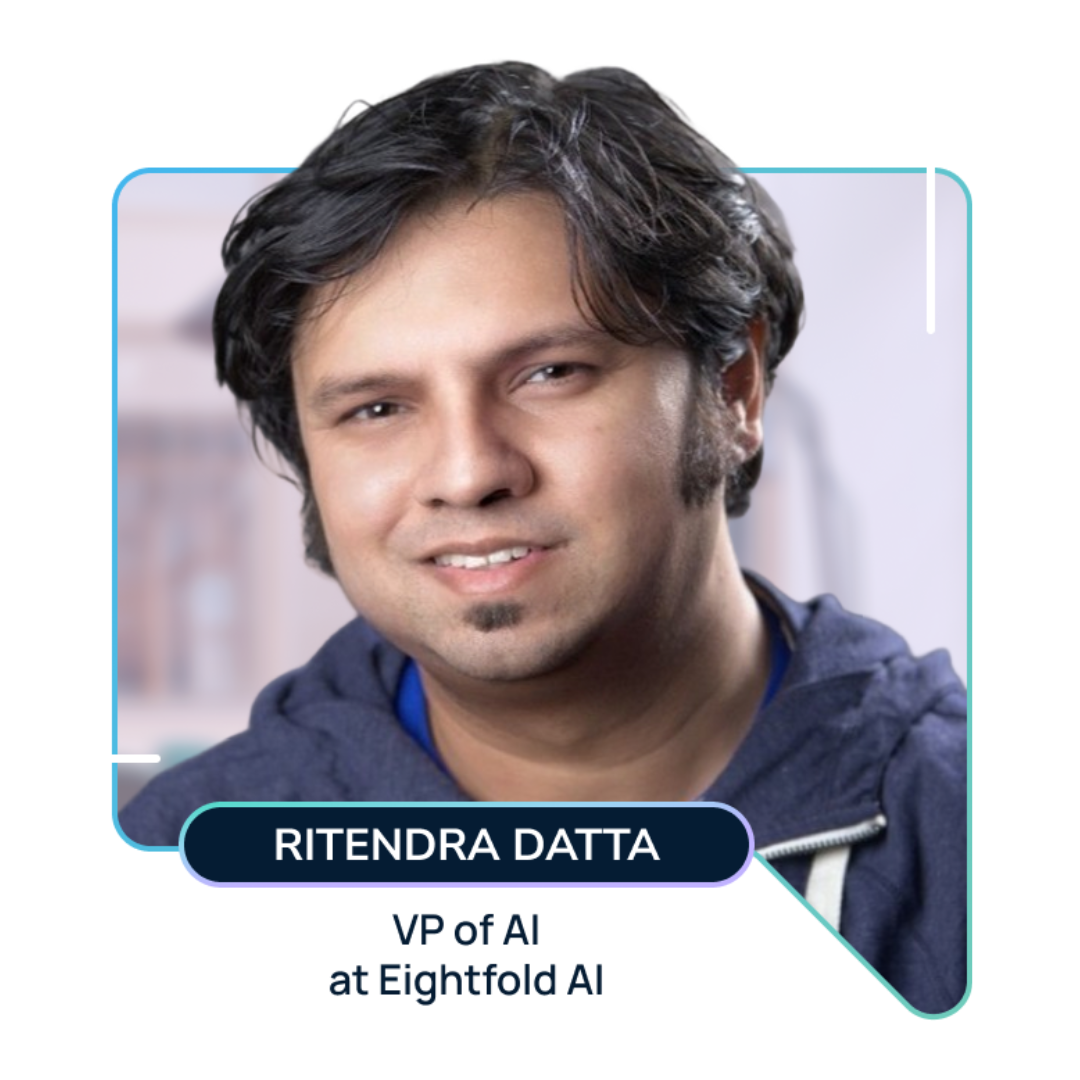
Nowhere is that clearer than in HR. Talent intelligence systems used by major employers to make hiring, retention, and career development decisions sit at the precise intersection of AI agents and high-stakes human outcomes — where a model’s error isn’t an inconvenience, it’s a consequence that lands on a real person’s career. Ritendra Datta, VP of AI at Eightfold AI, is direct about what that demands:
“Ethics in AI is non-negotiable — especially in HR, where systems directly impact people’s opportunities, careers, and identities. At Eightfold, we embed ethics into every layer of development. From data sourcing to model training, we constantly assess for bias, fairness, and explainability.”
— Ritendra Datta, VP of AI @ Eightfold AI
The emphasis on explainability matters. In domains where AI decisions affect individual people — such as hiring, performance evaluation, access to credit, and medical treatment — the ability to explain why a system reached a conclusion isn’t a nice-to-have. It’s a legal requirement in many jurisdictions and an ethical baseline everywhere. An AI agent that produces good outcomes but cannot explain its reasoning is not deployable in these contexts, regardless of its accuracy. Human oversight remains essential in part because humans can be held accountable in ways that AI systems currently cannot.
Datta extends this point further — responsible AI in high-stakes domains is not a single-company responsibility:
“This isn’t a one-company job. Ethical AI requires a broader framework — collaboration across governments, academia, and industry. It’s about defining shared guardrails and holding ourselves accountable. AI doesn’t just reflect our world — it shapes it. We owe it to users and society to get it right.”
— Ritendra Datta, VP of AI @ Eightfold AI
The implication for enterprise buyers is direct: when evaluating AI agents for HR, legal, financial, or other high-stakes functions, governance infrastructure — explainability, audit trails, bias testing, regulatory compliance — should be weighted as heavily as capability benchmarks. An agent that can’t explain its reasoning is an agent you can’t fully stand behind.
The Brand Is Personal
Marketing teams were among the earliest enterprise adopters of generative AI — which means they’re also among the first to confront governance questions at real scale.
The case for human oversight here isn’t that AI agents aren’t capable. It’s that brand trust is hard to build and easy to damage — and once it’s gone, it doesn’t come back quickly. Jessica Hreha, AI Transformation Director at Jasper, has seen this dynamic up close, having led one of the largest enterprise AI deployments in marketing — scaling from 10 licenses to 765 global team members and establishing what she describes as the industry’s first Marketing AI Council.
“That’s what responsible adoption looks like: automation where it makes sense, but always with human oversight to ensure brand trust and credibility.”
— Jessica Hreha, AI Transformation Director @ Jasper
The agents handle research, drafting, personalization, and optimization — all the work that scales. The human handles the final call on what goes into the world under the brand’s name. That’s not a hedge against AI’s limitations. It’s a deliberate design choice — one that keeps brand judgment where it belongs, with the people who are accountable for it.
Hreha also addresses a subtler question: not just whether humans should review AI output, but what kind of humans are best positioned to do it:
“AI is helping marketing specialists broaden their capabilities, but deep expertise still matters. A great writer or designer knows how to push AI further, break patterns, and create work that truly stands out — something AI alone can’t always do.”
— Jessica Hreha, AI Transformation Director @ Jasper
Human-in-the-loop isn’t just about catching errors. It’s about elevating outputs. An expert reviewer doesn’t just ask “is this correct?” — they ask “is this excellent?” AI working alongside specialists tends to produce better outcomes than AI working alone, not because the specialist is catching failures, but because the specialist is raising the ceiling.
Trust Is an Architecture Problem
In advisory and audit firms, accuracy isn’t just a product quality issue — it’s a professional and legal one. A confident but wrong answer doesn’t create a bad user experience; it creates downstream consequences for clients and firms alike. Greg Sabo, Head of Engineering at Fieldguide, builds AI systems in exactly this environment. His view on trust is architectural, not philosophical: it isn’t established by policy or cultural acceptance — it’s built or undermined by the design decisions made when the system is created.
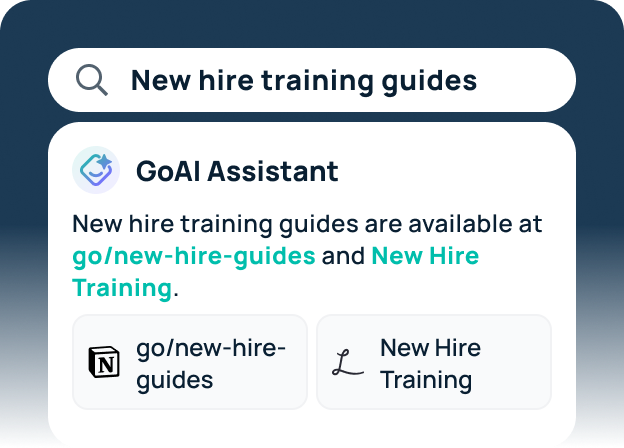
“When appropriately implemented, searching through an agent is a fundamentally better experience than traditional search experiences. Delivering an answer rather than simply a document massively improves employees’ ability to navigate their organization.”
—Greg Sabo, Head of Engineering @ Fieldguide
A focused, well-scoped AI system often outperforms a maximally comprehensive one — and the implications for oversight are direct. An agent that is appropriately scoped in what it can access and act upon is more predictable, more auditable, and easier to correct when something goes wrong. Scope creep doesn’t just create security risks; it creates governance gaps that make meaningful human oversight practically impossible.
There’s also a less-discussed challenge that sits beneath the technical one: cultural resistance. Organizations often skip adequate review structures not because they’ve thought it through, but because building them feels like admitting doubt in a technology they’ve publicly committed to.
“There’s still cultural resistance to using AI for work — [but] there’s also a slower-moving but more impactful opportunity for leaders and managers to recognize and encourage the real work that it takes to use AI effectively.”
—Greg Sabo, Head of Engineering @ Fieldguide
Designing systems where human review is a natural, visible, credited part of the workflow — rather than a reluctant backstop — is one of the underappreciated challenges of enterprise AI deployment.
A Framework for Getting It Right
The right level of human oversight isn’t a single answer — it’s a spectrum, calibrated to the stakes and reversibility of the decisions being made.
Full autonomy is appropriate when outputs are easily reversible, error consequences are low, and quality can be verified programmatically. Formatting documents, generating first drafts, summarizing content, tagging data — agents can operate here with minimal oversight and minimal risk.
Supervised autonomy — agents act, humans review before consequences land — is appropriate when outputs will be seen externally or affect individuals. Marketing content, customer-facing communications, candidate screenings, contract redlines. The agent does the work; the human reviews before it matters.
Human-led, agent-assisted is appropriate when decisions have significant, hard-to-reverse consequences affecting real people — final hiring decisions, performance evaluations, legal judgments, medical recommendations. The agent is a powerful tool in the hands of a human expert, not an autonomous decision-maker. The human owns the decision. The agent expands what’s possible within it.
Full human control with agent support remains appropriate for strategic decisions — organizational direction, major investments, crisis response — where the judgment and accountability requirements exceed what any current AI system can reliably provide.
This framework isn’t static. As models improve and governance infrastructure matures, the appropriate level of oversight for any given domain will evolve. What matters is having a principled basis for making those calls — rather than drifting toward autonomy because it’s technically possible, or resisting it because change is uncomfortable.
The Real Work of Responsible AI Adoption
The human-in-the-loop conversation is sometimes framed as a tension between innovation and caution. That framing is misleading. The leaders in this series aren’t arguing for caution as a constraint on AI. They’re arguing that building robust human oversight is itself the work of building AI that performs reliably at scale.
Sestier’s team implemented human review not because they didn’t trust their agent — but because that review loop is what makes the agent better over time, catching edge cases, feeding back corrections, and building the verified track record that allows it to be trusted with more.
Hreha’s Marketing AI Council instituted review not because they doubted AI’s capability, but because protecting the brand is non-negotiable — and because expert human review raises the quality ceiling, not just the quality floor.
Datta’s team embeds ethics into every layer of development, not because they’re worried about their models, but because the decisions those models influence — career opportunities, hiring outcomes, talent development — are too consequential for any other approach.
Sabo advocates for well-scoped, auditable AI architecture because that architecture enables trust to be established, extended, and maintained over time.
The human-in-the-loop imperative isn’t a concession to AI’s limitations. It’s the foundation on which AI’s potential gets realized. The organizations that understand that distinction — and build accordingly — are the ones that will be deploying AI agents at a meaningful scale, because they’ll have earned the trust that makes that scale possible.
Search across all your apps for instant AI answers with GoSearch
Emily Deuser is Content Manager at GoLinks, GoSearch, and GoProfiles, where she helps enterprise teams cut through the noise around workplace AI and find tools that actually make knowledge accessible. She specializes in turning complex productivity challenges into clear, actionable guidance that helps teams work smarter every day.
AI sprawl gets treated as a governance problem, but the real cost shows up first in productivity, security, and trust. Most companies are only funding half the fix.
Microsoft Copilot pricing goes beyond the headline cost. Compare every tier, uncover hidden Microsoft 365 license fees, and see how GoSearch delivers broader cross-tool AI coverage for less.