

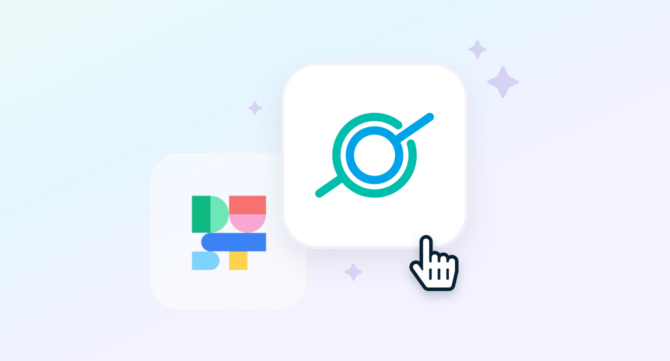

Dust’s $40M Series B is a signal worth paying attention to. The round, backed by Abstract, Sequoia, Snowflake Ventures, and Datadog, funds what Dust calls “multiplayer AI” — a model where humans and agents share workspaces, context, and parallel workstreams rather than each employee working in isolation with their own assistant.
The funding reflects genuine momentum. Enterprises are done piloting AI. They are now deciding which platforms will run at the center of how their organizations actually work. That is a harder decision than it looks, because the right answer depends on what “actually working” means at scale — not just for one team with sophisticated agents, but for every employee, every day, across every tool they use.
Quick Answer: Multiplayer AI solves a real problem, and Dust does it well. But enterprises need more than coordinated workspaces. They need unified search across their full stack, AI chat grounded in live data, no-code agents any team can build, multi-app workflow automation, and all of it embedded inside Slack and Microsoft Teams — not in a separate platform employees have to open. That is what GoSearch delivers.
GoSearch vs Dust: Platform Comparison
| Capability | GoSearch | Dust |
|---|---|---|
| Primary use case | Enterprise-wide AI search, custom agents, and multi-app workflows | Team-level human-agent coordination |
| Unified enterprise search | Yes — across 100+ apps | Limited — Context layer for connected tools |
| AI chat | Yes — grounded in live enterprise data | Yes — within shared workspaces |
| No-code custom agents | Yes — natural language, no engineering | Requires agent configuration |
| Multi-app workflow orchestration | Yes — action across 100+ connected tools | Yes — within workspace workflows |
| App connectors | 100+ (native, MCP, custom) | Limited |
| Real-time federated retrieval | Yes — data stays in source systems | No — centralized context layer |
| Bring your own cloud (BYOC) | Yes — AWS, Azure, Google Cloud | Not publicly available |
| Embedded agents | Yes — in Slack and Teams | Slack only |
| Deployment | Minutes to hours; full rollout in days | Varies by workflow complexity |
What Dust’s Series B Is Really Funding
Dust’s core argument is that enterprise AI has a single-player problem. Most deployments give each employee their own isolated assistant. The sales rep researches an account. The solutions engineer starts over the next day with no shared context. The RevOps analyst, the content lead, and the enablement manager each work from their own version of the brief. Productivity improves for individuals but stagnates at the organizational level.
Dust’s answer is shared workspaces where humans and agents collaborate from the same live context and work history. Agents handle research, synthesis, and execution in parallel. Humans step in at decision points. Dust calls this multiplayer AI, and the $40M will scale this model across more enterprise teams.
This is a legitimate product thesis. Coordination at the team level is an unsolved problem for most organizations, and investors are right to back it.
What the Funding Round Tells Us About Enterprise AI in 2026
The Dust raise surfaces three tensions that matter for every enterprise AI decision.
Coordination is valuable — but it is not the whole problem. The shift from individual AI tools to coordinated, team-level AI is real. But coordination alone does not solve for employees who need to find an answer buried across 15 applications, trigger a cross-system workflow without writing a prompt, or get AI assistance without leaving Slack. Those problems happen at far greater volume and frequency than formal multi-agent tasks, and they need a different solution.
Agent quality depends entirely on knowledge quality. Dust’s announcement highlights a “context layer” as a core product pillar — the gap between connecting to a system and actually understanding it. This is the right instinct. Agents operating on stale, siloed, or incomplete data produce confident wrong answers regardless of how well the coordination layer works. The knowledge infrastructure underneath any agent architecture determines its ceiling.
Governance and operational scale are non-negotiable at the enterprise level. Dust leads its announcement with SOC 2 Type II, GDPR readiness, granular permissions, and a full audit trail — because enterprise buyers will not deploy AI broadly without visibility, control, and accountability. That bar now applies to every platform in the category. The question is not whether a platform meets it, but how comprehensively it meets it across different regulatory environments.
Why Multiplayer AI Is Not Enough on Its Own
Dust’s coordination model addresses a specific and important problem. It does not address the broader operational reality of enterprise AI at scale.
Think about what happens across a typical workday for a 500-person organization. An engineer searches three tools trying to locate a decision made last quarter. A sales rep asks a question in Slack and waits for a human to answer because the AI does not have access to Salesforce. A new hire needs to understand onboarding policy but does not know which system it lives in. A customer success manager wants to escalate an issue across Jira and HubSpot without switching between apps.
None of these are coordination problems. They are search problems, access problems, and workflow problems — and they repeat hundreds of times a day across every team. An enterprise AI platform has to solve for all of them, not just the sophisticated multi-agent workflows that a subset of power users will run.
The organizations that get the most from AI in 2026 will be the ones that make it useful for every employee across every tool — not just the ones with the most well-designed coordination layer for complex edge cases.
Where GoSearch Goes Beyond Multiplayer AI
GoSearch and Dust solve adjacent problems at different layers of the enterprise AI stack. Dust optimizes the coordination layer for teams that already know what they need agents to do. GoSearch builds the foundation that makes every employee and every agent more effective — and layers coordination, automation, and action on top of it.
One platform for search, agents, chat, and workflows. GoSearch combines unified enterprise search, AI chat grounded in live data, no-code custom agents, and multi-app workflow automation in a single platform. Employees do not need to know which tool to open for which task. They get one experience that handles the full range of daily work.
No-code agents built by the people closest to the work. GoSearch lets any team build and deploy specialized agents using natural language — no engineering required. A RevOps manager can build an agent that surfaces Salesforce pipeline risk in real time. A support lead can build one that resolves tier-one queries from Zendesk without human escalation. An HR team can build one that answers policy questions grounded in actual documentation.
Multi-app orchestration across 100+ connected tools. GoSearch agents do not just retrieve and summarize — they act. An agent can pull data from one system, process it, and push an update to another in a single workflow, across 100+ tools through natively-built, MCP, and custom connectors. That is operational scale, not just coordination.
AI embedded in the tools employees already use. GoSearch integrates directly into Slack and Microsoft Teams — the two platforms where most enterprise employees spend the majority of their day. Dust covers Slack natively too, but Teams support gives GoSearch broader reach across enterprise environments where Microsoft is the primary collaboration stack. Employees search, ask questions, and trigger workflows without leaving the conversation, which drives adoption far more consistently than a separate platform.
Compliance coverage built for regulated industries. Both platforms hold SOC 2 Type II certification, GDPR compliance, and commit to zero data retention with LLM providers. GoSearch extends further with full HIPAA certification and CCPA compliance — relevant distinctions for healthcare organizations, companies handling California consumer data, and enterprises operating under multiple overlapping regulatory frameworks. GoSearch also supports bring-your-own-cloud deployment on AWS, Azure, and Google Cloud, giving organizations with strict data residency requirements full control over their environment.
Governance built into the data architecture. GoSearch’s federated retrieval architecture retrieves real-time data directly from source systems without creating a central index of sensitive information. Source-system permissions carry over automatically. No data duplication means no additional attack surface — a meaningful architectural layer on top of the compliance certifications both platforms share.
Deployed in days, not quarters. GoSearch connects to most organizations’ tool stacks in minutes to hours, with full rollout achievable in days. Enterprise AI adoption stalls when implementations drag on for months of configuration and change management. Fast deployment means faster organizational learning about what actually works.
The Question Every Enterprise Buyer Should Ask
Dust’s raise is good news for the category. It confirms that enterprise AI is maturing past individual tools and into coordinated, system-level adoption. That shift is real, and it benefits platforms that take the problem seriously.
But the right question for enterprise buyers is not which platform has the most sophisticated coordination model. It is which platform makes AI genuinely useful across the whole organization — for the engineer who cannot find a document, the sales rep who needs an answer in Teams, the new hire navigating onboarding, and the RevOps team trying to automate a cross-system workflow without writing code.
GoSearch is built for that scope: search, agents, AI chat, and workflow automation — deployed fast, governed properly at the data layer, and embedded in the tools every employee already uses.
Get a personalized demo to learn more and see GoSearch in action across your stack.
Search across all your apps for instant AI answers with GoSearch
Schedule a demo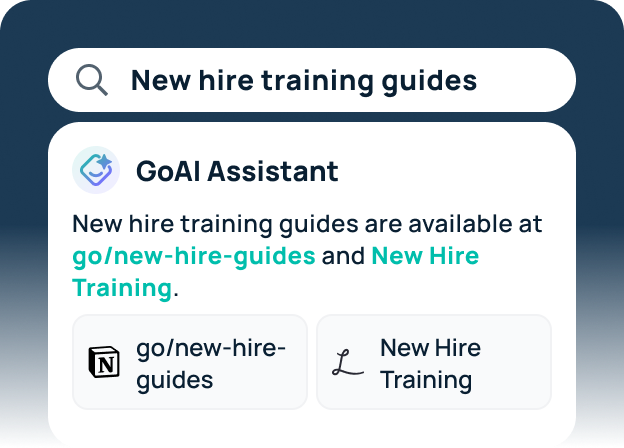
Frequently Asked Questions
Dust is an enterprise AI platform focused on human-agent coordination inside shared workspaces. Its $40M Series B, raised in May 2026 from Abstract, Sequoia, Snowflake Ventures, and Datadog, funds the expansion of multiplayer AI — a model where teams and agents work from shared context in parallel, rather than each employee running an isolated AI session.
Multiplayer AI is Dust’s term for AI that operates across a team rather than for individuals in isolation. Teams share a common workspace, context, and set of agents that advance work in parallel and hand off to humans at decision points — addressing the productivity loss that comes from every employee working in their own separate AI session.
Dust focuses on team-level human-agent coordination inside shared workspaces. GoSearch delivers enterprise-wide AI — unified search across 100+ connected apps, AI chat grounded in live data, no-code custom agents any team can build without engineering support, and multi-app workflow automation — embedded directly in Slack and Microsoft Teams.
Yes. GoSearch lets teams build and deploy custom AI agents using natural language — no coding required. Agents retrieve data from connected systems and take action across multiple applications within a single workflow. Any team member can build and own their own agents.
Yes. GoSearch agents connect across 100+ enterprise tools through natively-built, MCP, and custom connectors. An agent can pull data from one system, process it, and push an update to another — all within a single automated workflow, without a human switching between apps.
Yes. GoSearch integrates directly into Slack and Microsoft Teams. Employees search, ask questions, and trigger workflows without leaving the apps they already use. This embedded experience drives adoption far more reliably than asking employees to open a separate AI platform.
GoSearch holds SOC 2 Type II certification and is fully compliant with GDPR, HIPAA, and CCPA. It maintains zero data retention agreements with LLM providers, meaning data is never stored or used to train AI models. Its federated retrieval architecture retrieves data in real time from source systems without centralizing sensitive information, and it supports bring-your-own-cloud deployment on AWS, Azure, and Google Cloud for full data residency control.
Most organizations connect their full tool stack within minutes to hours, with organization-wide rollout achievable in days. That speed reduces implementation risk and accelerates time-to-value compared to platforms that require months of configuration before employees see any benefit.