


Google launched Gemini Enterprise to bring agentic AI and search into one platform. For organizations already built on Google Cloud and Workspace, it’s a natural extension of tools they already use. But most enterprises don’t run on a single vendor’s stack. The average enterprise runs between 900 and 1,000 applications, spread across clouds, models, and departments that Google doesn’t own. That gap is why so many teams evaluating Gemini Enterprise end up searching for an alternative before they finish the pilot.
Quick Answer: GoSearch is the best Gemini Enterprise alternative for organizations that want multi-LLM flexibility, 100+ ready-to-use connectors (including MCP), and automated workflows without being locked into Google’s model, cloud, and pricing ecosystem. Unlike Gemini Enterprise, which ties agents to Gemini models and requires GCP-level setup for custom integrations, GoSearch works with any LLM, deploys natively in Slack and Microsoft Teams, and retrieves data in real time instead of relying on scheduled index syncs.
What Gemini Enterprise Is Built For
Gemini Enterprise from Google Cloud centers on three things: Gemini models, a no-code agent builder, and data connectors that pull enterprise information into AI. It’s designed to work best when the rest of your stack is also Google’s, since data from non-Google sources often needs to be staged into first-party systems like BigQuery, Cloud Storage, or Google Drive before Gemini Enterprise can index it. For a Workspace-native company with in-house GCP expertise, this is a reasonable architecture. For everyone else, it introduces friction before the first agent ever ships.
That friction shows up in a few consistent ways once teams get past the demo and into implementation.
Where Gemini Enterprise Creates Friction
Vendor lock-in
Every agent built on Gemini Enterprise runs on Google’s Gemini models, full stop. There’s no way to route a workflow to a different model for cost, latency, or quality reasons. If Google changes its model roadmap or pricing, that decision cascades directly into every agent your team has built.
A thinner connector library, with read-only access
Google’s documentation lists 13 generally available third-party connectors plus roughly 40 more in public or private preview, so around 50 connectors total against GoSearch’s 100+. The bigger gap is what those connectors can actually do. Most of Gemini Enterprise’s catalog is built for search only. Connectors retrieve data but can’t write back to the app. Write actions, like creating a ticket or updating a record, are documented for roughly 30 of the 50-plus connectors, and only after an admin separately enables them. Even then, Gemini Enterprise requires user confirmation on every action by default. GoSearch’s 100+ connectors support full read and write from the start, with no separate enablement step.
Setup complexity that requires engineering time
Anything beyond the prebuilt Google connectors, like a custom MCP server, means registering an OAuth client with your identity provider, granting Discovery Engine Editor IAM roles, allowlisting server domains, and hosting the endpoint on a public IP, since private VPC networking isn’t supported yet. G2 reviewers of the Gemini Enterprise Agent Platform describe a steep learning curve tied to IAM roles and project setup, particularly for teams that aren’t already fluent in GCP.
Cost that’s hard to predict
At roughly $30 per user per month, Gemini Enterprise costs scale quickly for larger teams. Reviewers also describe confusion between what’s covered under the Enterprise tier and what requires additional “Ultra” compute spend to avoid rate limits, and on the Agent Platform side, more than 75 reviewers specifically called out pricing as prohibitively high or difficult to forecast.
GoSearch vs. Gemini Enterprise: Quick Comparison
| Capability | GoSearch | Gemini Enterprise |
|---|---|---|
| LLM flexibility | Multiple LLMs, no lock-in | Gemini models only |
| Out-of-the-box connectors | 100+, full read and write | ~50 total; only ~30 support write actions, the rest are search/read-only |
| MCP setup | Ready to use | Pre-GA; requires OAuth client registration, IAM roles, public IP hosting |
| Automation | No-code agents + automated workflows | No-code agent builder; deeper automation requires dev resources |
| Retrieval model | Federated, real-time | Primarily indexed, with scheduled sync cycles |
| Slack integration | Native chat, search, agents, and workflows | Slash-command search only; no agent actions in Slack |
| Cloud dependency | Works independent of any single cloud vendor | Built around GCP and Workspace |
| Pricing | Transparent, predictable | Tiered, with reported cost unpredictability at scale |
How GoSearch Solves These Gaps
Model flexibility, not model lock-in
GoSearch is model-agnostic, so teams can choose or switch between LLMs as needs change instead of being tied to a single vendor’s roadmap. That flexibility extends to security posture too: GoSearch supports Zero Data Retention agreements, so model flexibility doesn’t come at the cost of data control.
A connector library that’s ready on day one
GoSearch ships with 100+ app connectors already built, including MCP connectors that let agents take action instead of just retrieving information. There’s no staging period, no waiting on a preview feature to reach general availability, and no custom development project just to connect a tool your team already uses.
Automation that goes beyond assisted chat
GoSearch supports no-code agent building for any employee, plus automated workflows that carry a task through multiple steps without a person triggering each one. Gemini Enterprise’s no-code builder covers similar ground for simple agents, but anything more advanced, like custom logic built with the Agent Development Kit or agents deployed through Vertex AI Agent Engine, requires developer resources most content, ops, and support teams don’t have on hand.
Real-time retrieval instead of scheduled syncs
GoSearch uses federated real-time retrieval, pulling live data at the moment a question is asked. Gemini Enterprise’s default architecture indexes data through scheduled full and incremental syncs, with cadences as infrequent as every seven days depending on the connector. In environments where information changes by the hour, like support queues or sales pipelines, that sync lag means agents can be working from data that’s already stale.
No cloud dependency
GoSearch works across any cloud and productivity stack, so there’s no need to restructure data around a single vendor’s infrastructure before an agent can use it. That difference alone tends to cut implementation timelines significantly compared to teams standing up GCP projects, IAM roles, and Cloud Run services first.
Agents in Slack and Teams
GoSearch is natively embedded in both Slack and Microsoft Teams, supporting full conversational chat, search, custom agents, and agent workflows inside those apps. Gemini Enterprise’s Slack integration is narrower: Google’s own documentation states that the Gemini Enterprise app for Slack “supports only Gemini Enterprise search” and that data store actions aren’t supported. In practice, that means Slack users can run a slash command to search connected data, but they can’t trigger an agent or a workflow without leaving Slack.
When Gemini Enterprise Might Be the Better Fit
Gemini Enterprise can be the right call for organizations that are already fully standardized on Google Workspace and GCP, with engineering resources on hand to build custom MCP connectors and ADK-based agents. If your data already lives in BigQuery, Drive, and Cloud Storage, and your team is comfortable managing IAM roles and Cloud Run deployments, Gemini Enterprise’s tight integration with the rest of Google’s stack can outweigh its setup complexity. It’s a strong fit for a specific kind of buyer. It’s just not the fit for most.
Consider Gemini Enterprise Alternatives
Gemini Enterprise works well inside the boundaries Google built it for: a single model vendor, a Google-centric cloud stack, and a connector ecosystem that’s still catching up to its own marketing. Most enterprises don’t operate inside those boundaries. They run a mix of LLMs, hundreds of disconnected apps, and teams in Slack and Teams who need agents to do more than search. GoSearch is built for that reality, with model flexibility, a ready-to-use connector library, real-time retrieval, and automation that doesn’t require an engineering team to stand up. For organizations weighing both platforms, the deciding question isn’t which one has more name recognition. It’s which one fits the stack you actually have.
Search across all your apps for instant AI answers with GoSearch
Schedule a demo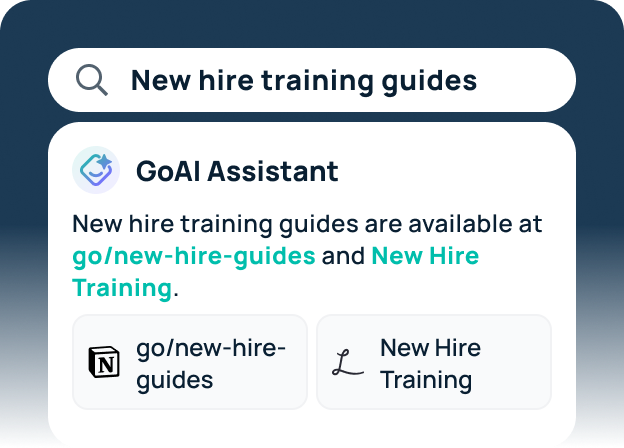
Frequently Asked Questions
GoSearch is the best Gemini Enterprise alternative for teams that need multi-LLM flexibility, real-time federated search, and 100+ ready-to-use connectors. It avoids the GCP and Workspace dependency that shapes Gemini Enterprise’s setup and pricing, making it a better fit for organizations running a mixed technology stack.
No, but it’s built around the Google ecosystem. Non-Google data typically needs to be staged into first-party Google sources like Cloud Storage or BigQuery before Gemini Enterprise can index it, which adds setup steps for teams not already standardized on GCP.
Yes, but the custom MCP server data store is a pre-GA feature with limited support. Setup requires OAuth client registration, specific IAM roles, and hosting the MCP endpoint on a public IP, since private VPC networking isn’t currently supported.
No. Gemini Enterprise runs exclusively on Google’s Gemini models. Organizations that want the flexibility to use or switch between multiple LLMs need a model-agnostic platform like GoSearch instead.
GoSearch offers transparent, predictable pricing, while Gemini Enterprise reviewers report cost increasing quickly at scale, plus added charges for “Ultra” compute tiers. Exact pricing depends on team size and plan, so request a quote directly to compare against your specific usage.
Yes. GoSearch is natively embedded in both platforms, supporting full conversational chat, search, custom agents, and automated workflows. Gemini Enterprise’s Slack app is limited to slash-command search, with no support for triggering agent actions from within Slack.