


Enterprise search is entering a new era powered by AI, automation, and contextual understanding. Instead of static keyword results, next-generation platforms use large language models (LLMs) and autonomous agents to reason, summarize, and recommend — helping teams make faster, smarter decisions.
Key Takeaways
- The future of enterprise search is intelligent, contextual, and powered by AI.
- Large language models (LLMs) transform search from keyword matching into true understanding and reasoning.
- Generative AI enables search systems to summarize insights, not just retrieve files.
- Autonomous agents will proactively surface trends and knowledge before employees even ask.
- Hyperconnected systems unify cloud, chat, and on-premise data into one searchable layer.
- The next generation of search emphasizes trust, personalization, and governance for enterprise-wide adoption.
- GoSearch leads this evolution with AI-powered enterprise search that connects people, tools, and knowledge in one place.
AI, Innovation, and the New Era of Knowledge Discovery
As company data spreads across countless apps, chat tools, and wikis, the challenge isn’t whether teams need better search — it’s how to make search smarter.
Enterprise search is evolving into an intelligent system that speeds up decisions, deepens knowledge discovery, and strengthens collaboration across the organization. The future of enterprise search lies in AI-powered solutions that understand context, connect multiple data sources, and deliver precise, relevant results — without the noise.
Driven by large language models (LLMs) and autonomous agents, this new generation of search is transforming how teams find information, share knowledge, and get work done.
1. The Shift from Keyword Matching to Contextual Understanding
Traditional enterprise search relied on keyword matching — users typed exact terms, and the system returned documents containing those words. While this worked for basic lookups, it often produced irrelevant results and forced employees to dig through pages of content to find what they needed.
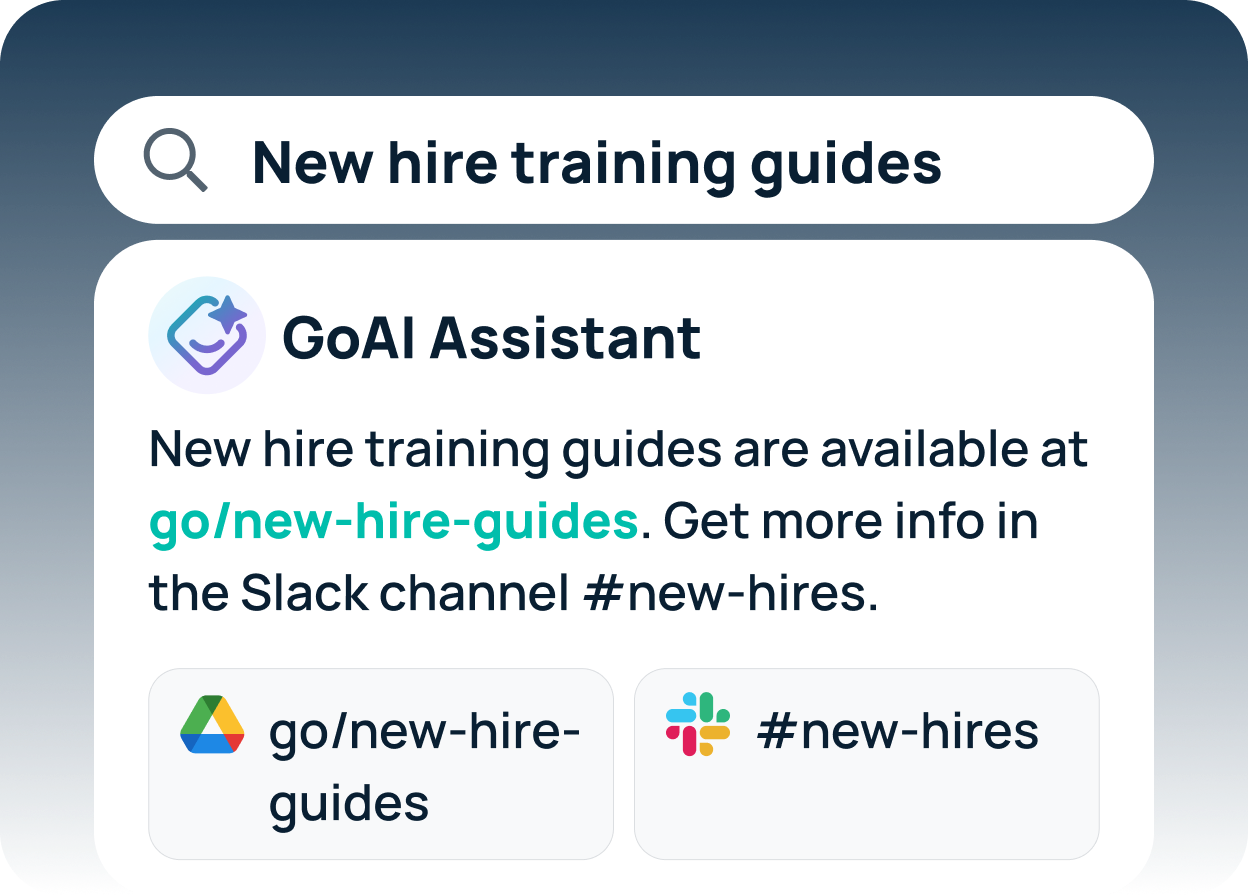
Modern AI-powered search platforms change that. Using natural language processing and semantic search, they understand the intent behind a query — not just the literal words. For example, instead of simply listing documents with “customer satisfaction,” the system interprets “How did customer satisfaction trend last quarter?” as a request for data and insights.
AI-driven search engines deliver more accurate, relevant results by understanding context. This improves the user experience and overall productivity. The outcome is simple: employees spend less time searching and more time acting on insights.
2. How Generative AI Transforms Enterprise Search
The rise of generative AI marks a major turning point in the evolution of enterprise search. Instead of simply locating content, AI can now synthesize it — summarizing key insights, answering complex questions, and even generating new outputs.
For example, an employee might ask:
“Summarize last quarter’s top customer pain points.”
Rather than returning a list of tickets, an AI-powered search solution — driven by large language models (LLMs) — delivers a concise summary that aggregates patterns from emails, CRM notes, and chat logs.
This shift from retrieval to reasoning means enterprise search no longer stops at displaying documents — it provides actionable intelligence. LLM-enhanced systems can:
- Summarize information from multiple data sources
- Generate contextual reports and insights
- Continuously learn from user behavior to refine relevance
As AI-powered search results become more conversational and contextual, they redefine how teams find answers, make decisions, and collaborate.
3. Autonomous Agents and Intelligent Knowledge Discovery
Beyond generative AI, autonomous agents represent the next leap forward in enterprise search. These AI-driven systems can act independently — monitoring data, spotting trends, and proactively delivering insights before a user even runs a query.
Imagine a search system that alerts marketing to a sudden spike in negative customer sentiment or notifies HR of engagement issues before they affect retention. By combining AI intelligence with advanced search capabilities, organizations shift from reactive information retrieval to proactive knowledge discovery.
This evolution isn’t about replacing human expertise — it’s about amplifying it. Autonomous search agents make knowledge accessible in real time, enabling faster, data-driven decisions informed by the full context of organizational information.
4. Search-Driven Decision-Making Becomes the Norm
As enterprise search matures, it’s evolving from a simple productivity tool into a strategic decision-making engine. Modern search platforms connect information across silos — from marketing decks and product docs to engineering tickets and HR analytics — creating a single source of truth.
This visibility enables:
- Collaboration across teams: Everyone works from the same data and context.
- Data access for all: Employees can find information instantly without relying on IT or analysts.
- Smarter decisions: Built-in analytics surface trends and suggest next steps.
Companies that adopt this search-driven approach see faster decisions, greater accuracy, and stronger innovation. Enterprise search isn’t just supporting work anymore — it’s driving it.
5. Personalization and User Experience Take Center Stage
The future of enterprise search depends not only on intelligence, but also on experience. A search system that understands intent yet lacks a smooth, intuitive interface will still fall short.
Next-generation search solutions are raising the bar by focusing on:
- Personalized results tailored to each user’s role, preferences, and work patterns.
- Natural language queries that let employees ask questions conversationally.
- Multimodal search that unifies text, video, and structured data for more complete answers.
These enhancements reduce friction and build trust — ensuring employees get accurate, relevant results quickly, even in complex enterprise environments.
The Future of Enterprise Search by 2030
So what’s next? Here are five defining trends shaping the future of enterprise search in the decade ahead:
- Full AI Integration — Search will be powered by large language models (LLMs) that reason, summarize, and recommend — delivering contextual answers instead of long document lists.
- Hyperconnectivity — Systems will unify cloud, on-premise, and third-party data, creating a seamless layer across the digital workplace.
- Conversational and Voice Interfaces — Employees will search naturally, through voice or chat, making information retrieval faster and more human.
- Ethical AI and Governance — As AI becomes central to operations, organizations will enhance transparency, privacy, and bias control.
- Autonomous Knowledge Systems — Tomorrow’s enterprise search will not just find information — it will manage it, automatically tagging data, updating documentation, and surfacing insights proactively.
The Takeaway: Intelligent, Contextual, and Generative
The answer to “What is the future of enterprise search?” is clear — it’s intelligent, contextual, and generative.
The next generation of enterprise search platforms will use large language models and human intent understanding to connect people with knowledge instantly.
By moving beyond keyword matching and adopting AI systems that understand context, purpose, and relationships, organizations will unlock the full potential of their collective intelligence.
The era of traditional enterprise search is over — the age of AI-powered knowledge discovery has begun.
Ready to embrace the future of enterprise search?
Try GoSearch today and experience AI-powered search that helps your team find answers, share knowledge, and work smarter — all in one place.
Personal access to agentic enterprise search, free with GoSearch.
Sign up